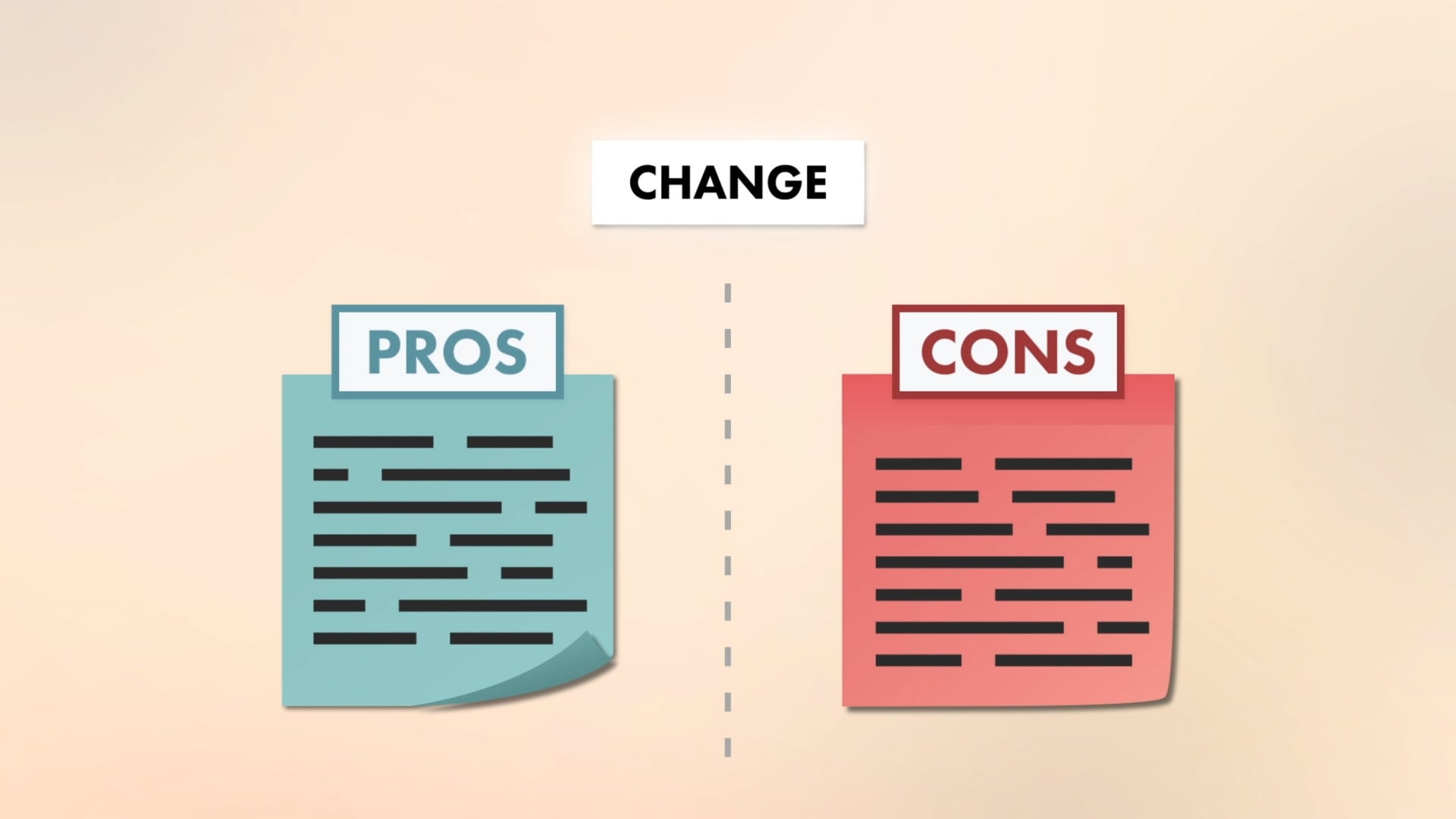

We have developed within motivational interviewing a strategy called pros and cons, which is quite widely used in many settings. And let me give you an example, say with smoking. What you do is this, you're basically asking about the pros and cons, but you're faced with two options, and which one you choose depends on the situation. So with smoking, you can ask either about the pros and cons of smoking, as it's happening now, or you could ask about the pros and cons of change. And let me take each of these in turn. So let's take the example of the pros and cons of smoking.
It's usually a good idea to start with the pros and the benefits, because it engages the patient and they feel a lot less threatened. And the idea is just to listen to the answers, right? Then you turn to the cons. And that's where you might hear the change talk. So it's good to do it in that order. Once you've heard both sides of the dilemma, you're then in the position to summarize what the person said and ask them what they make of it. If you now look at quitting smoking, you can ask about the pros and cons of quitting.
And here you're probably better to ask about the downside first, but then you wanna ask about the pros of quitting smoking. Again, same routine, listen to the answers to both questions and summarize. Now whichever way you look at this, when you do the summary, it's really important to capture the change talk that you've heard. Of course, you'll mention the other side, but highlight the change talk strongly at the end of the summary.
Then you're in an excellent position to simply ask someone, so what do you make of this? And that's where you might find them making a decision.