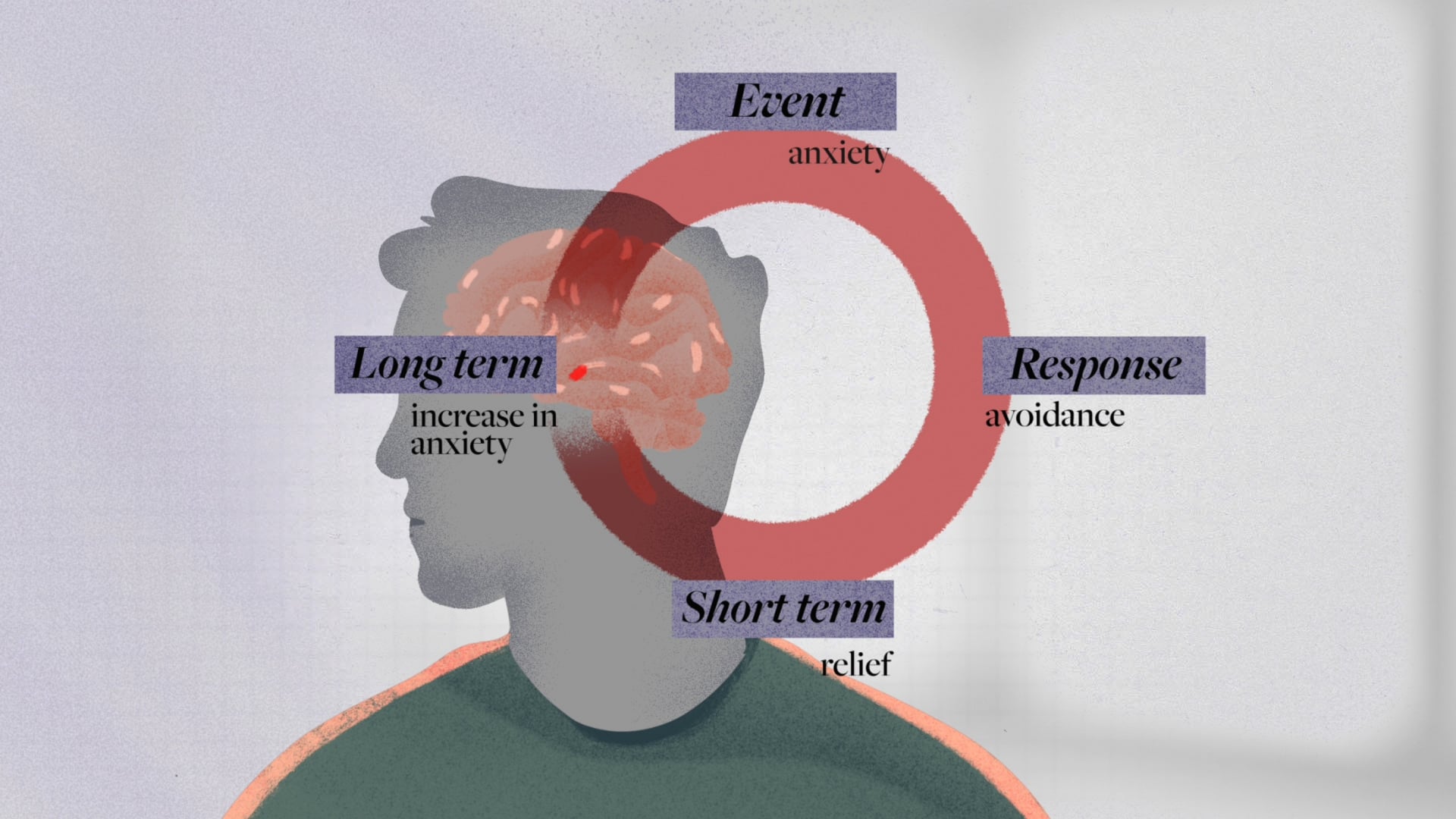

The anxiety response is a cyclical process that goes as follows: when there's the proposition of something being threatening or dangerous the brain, specifically the limbic system, signals that this is in fact threatening and therefore there's a cascade of symptoms that flood the body with your arousal increasing and then you having goal directed behavior to approach or to flee from a given situation. Once out of the threatening situation there's temporary relief but it backfires and reinforces itself due to that limbic system reminding me in the future that I responded that way and therefore that behavioral response is actually working to maintain that cyclical nature of anxiety. So once that's reinforced and that cyclical nature of anxiety occurs, clients oftentimes develop unrealistic beliefs and misappraisals about threat and their perceived ability to navigate threat. A final note: it's really important to understand that anxiety cycle for another reason, and that is it will help you understand how this anxiety response manifests across clients, how it's pretty consistent across clients and it helps you as a skilled clinician to understand why the interventions that you will be employing throughout treatment are effective and it's also important to understand why you're assessing all of those components of the emotional experience.
So it's going to enhance your conceptualization and it's going to enhance your ability to engage in effective treatment from a CBT perspective.