Q&A
When Emotions Escalate: DBT for Adolescents and Families

How DBT's Biosocial Theory, validation, and practical strategies help clinicians understand emotional dysregulation and respond effectively to family conflict.
Q
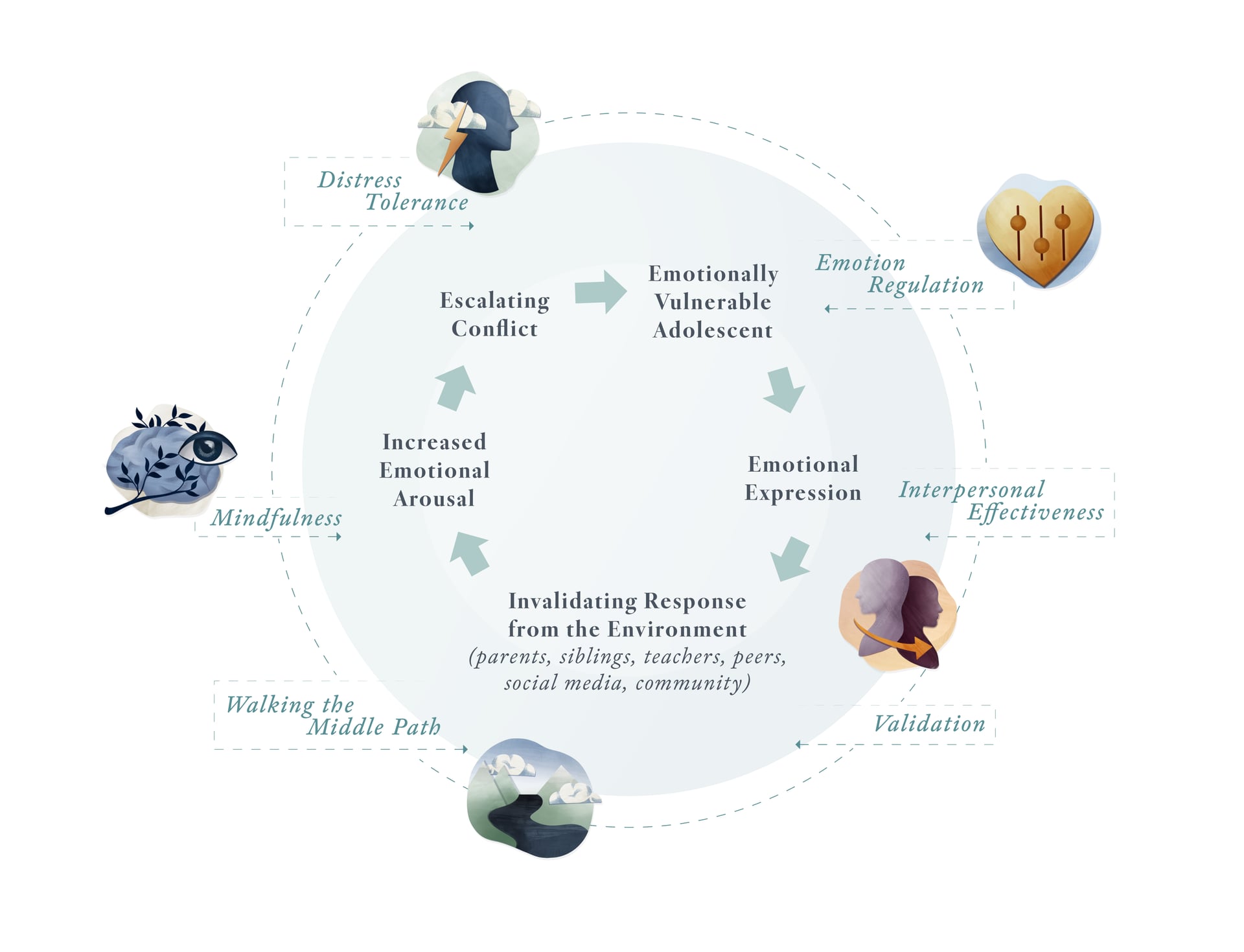
When adolescents experience high family conflict and emotional escalation, how does a DBT framework help clinicians understand the emotional and relational dynamics contributing to these patterns?
A
Q
Once these patterns are understood through a DBT framework, how do clinicians approach treatment for adolescents who experience frequent arguments, emotional outbursts, irritability, and escalating conflict at home or school?
A
Q
When conflict and escalation become repetitive patterns within families, what tends to keep these cycles going?
A
Q
What DBT skills are especially helpful for adolescents who react quickly, become emotionally overwhelmed, or struggle to pause before acting?
A
Q
Parents may be exhausted, reactive, or walking on eggshells by the time they seek treatment. How does DBT help parents respond more effectively during high-conflict interactions?
A
Q
In high-conflict sessions, therapists can easily get pulled into power struggles themselves. What therapist stance is most helpful when working with adolescents and families experiencing ongoing conflict and emotional escalation?
A
You may also like