
Another question that we use in the sessions is the scaling questions. We ask the scaling questions in sessions to help the client to measure where they are and where they want to be. We ask a question like, on a scale of 1 to 10, where are you now? And, this helps clients be able to say where they are. It actually anchors their experience.
One of the common uses of the scale is to be able to help the client see how much progress they've already made. To be able to talk about their successes. When we use the scale in this way, we often ask the question, why are you not lower on the scale? If you're a 5, why aren't you a 4 or a 3 on the scale? This helps the client then to really talk about their successes. And, also, it changes their perception and helps them see that they are already making progress toward their miracle or toward their outcome that they desire.
A second use of the scale is to use it to help the client think about a small step that they can make toward their outcome. So, say the client says they're 4 on the scale, we might ask them a question like, how could you get to a 5 on the scale? And, when we ask that type of question to the client, then they really have to think about it, and they'll have to describe then things that they will be doing in the future that could make a difference and get them further along toward their outcome. Another way that we really use the scaling that's really important is to help the client gain a greater vision and discussion about their preferred future.
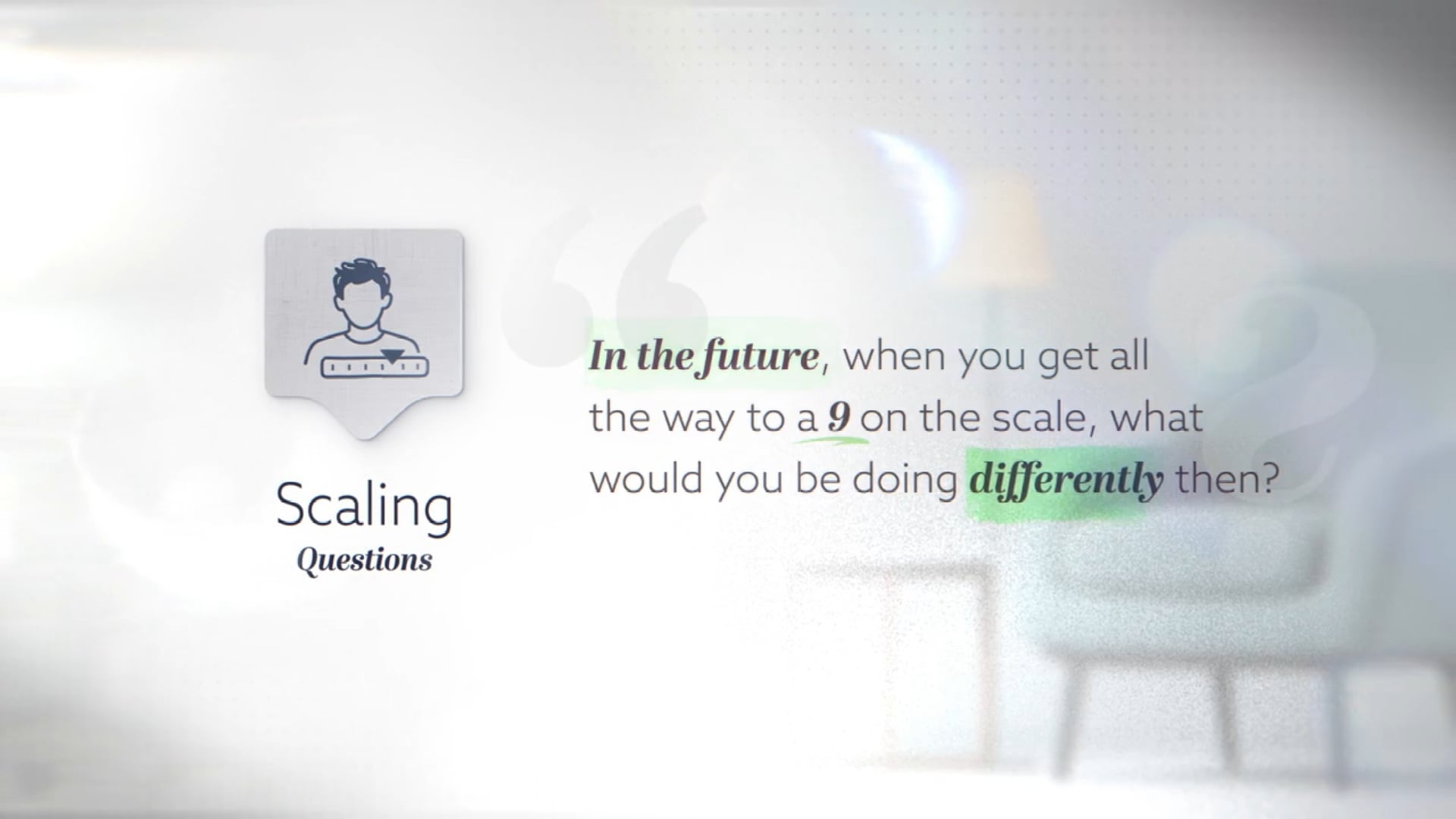
So, if they're are 5 on the scale, we might say, in the future, when you get all the way to a 9 on the scale, what would you be doing differently then? What would be happening in your life then? I've found the scale to be really useful when people are very distressed and upset. They'll be going on and on about their problems. They'll be emotionally dysregulated. And, I will say to them, so I know this is a very distressing situation to you. So, let me just ask it to you this way. On a scale of 1 to 10, what is your experience now with this on the scale?
And, just asking them that question and asking them to put the numbers on the scale has a calming effect. It engages the frontal lobes of the client, and it has a calming effect so that they can slow down, they can de-escalate a little bit, and talk to you about the goals or outcomes or what is needed in their particular situation.