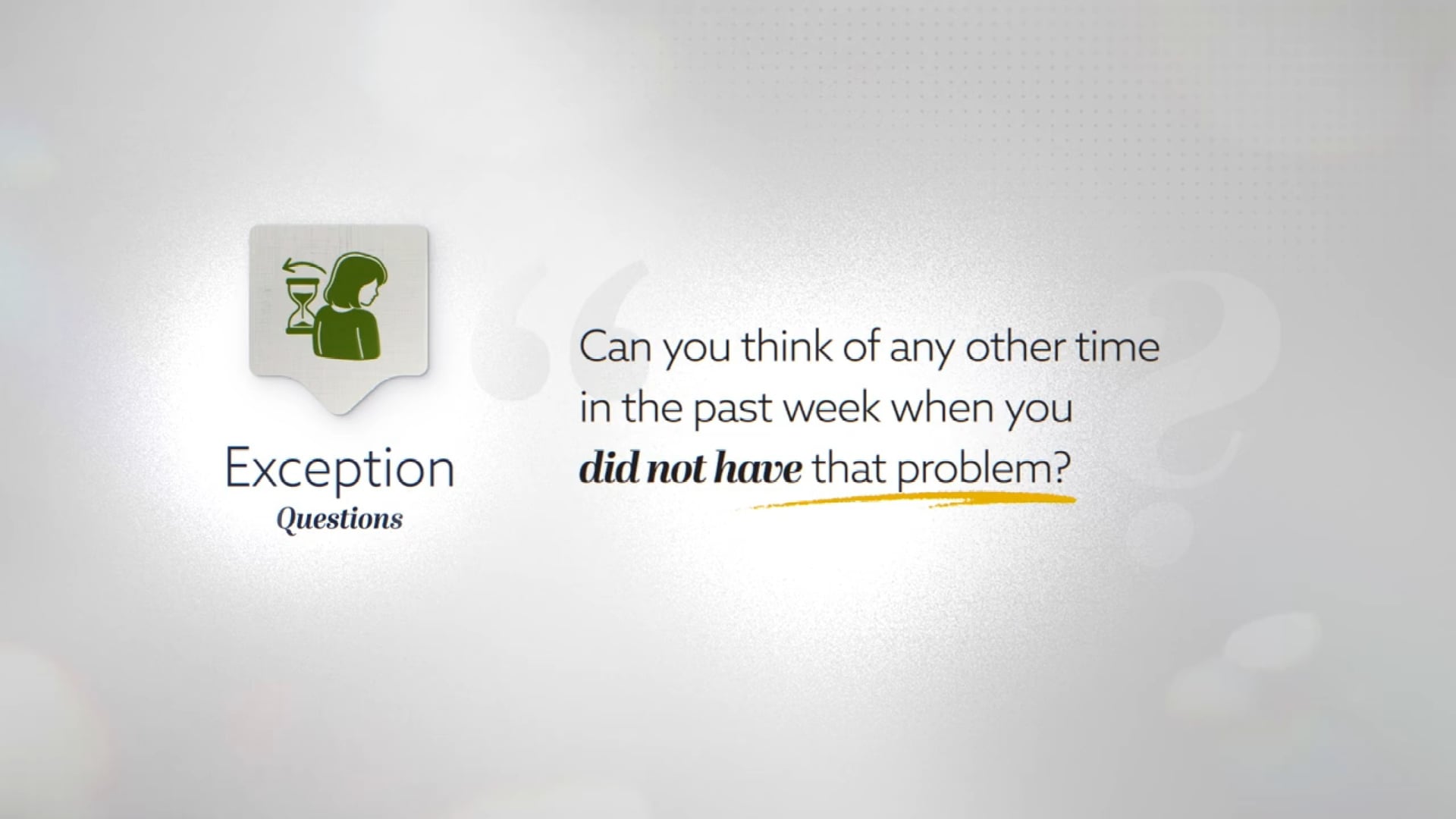

So, one of the tools that we have in Solution-Focused Brief Therapy is exception questions. These are questions that get at when the problem isn't happening, when things are better somehow, when things are different in a helpful way. So, when you find your client constantly talking about problems and having difficulty shifting into describing their desired future or you know, what they want for themselves instead, then actually asking very directly about exceptions might be a way to go about that by saying so. When would you say you do not have that problem? Can you think of any other time in the past week when you did not have that problem?
You might also ask in order to get a better idea of what needs to be done, I now need to know about when the problem does not happen. Looking for exceptions helps people to focus on when the problem isn't happening as well as when it is. So, they get to make kind of a conceptual shift so that they can potentially do some of that themselves even when you're not looking and asking those questions. So, now I'd like to introduce you to some of the follow-up questions that you can use to elaborate on and make the exception finding questions more useful.
How do you explain that this problem doesn't happen when the exception happens? What do you do so that you don't have this problem then? Where did you get the idea to do it differently at those times? Whose idea was it to do it that way? What is different for you at those times when the exception occurs? So, as you can see, these questions help elaborate on the exception and build the usefulness of those exceptions because it of course implies some agency of the client or at least that they start looking for what they might be doing or how they might create circumstances around them to make these exceptions useful in some way.
And, actually, we are always listening for exceptions. So, even when we don't directly ask about it, we're always looking for when the problem isn't happening, when it's a little bit better, when there's something going on that shifts it in some way that might be potentially meaningful. So, even if you aren't directly asking about exceptions, always keep an ear for those exceptions. And, this actually is a great illustration about how people come up with their own solutions and how I'm kind of the catalyst. I'm there to facilitate that, but I'm actually working with what they are bringing.