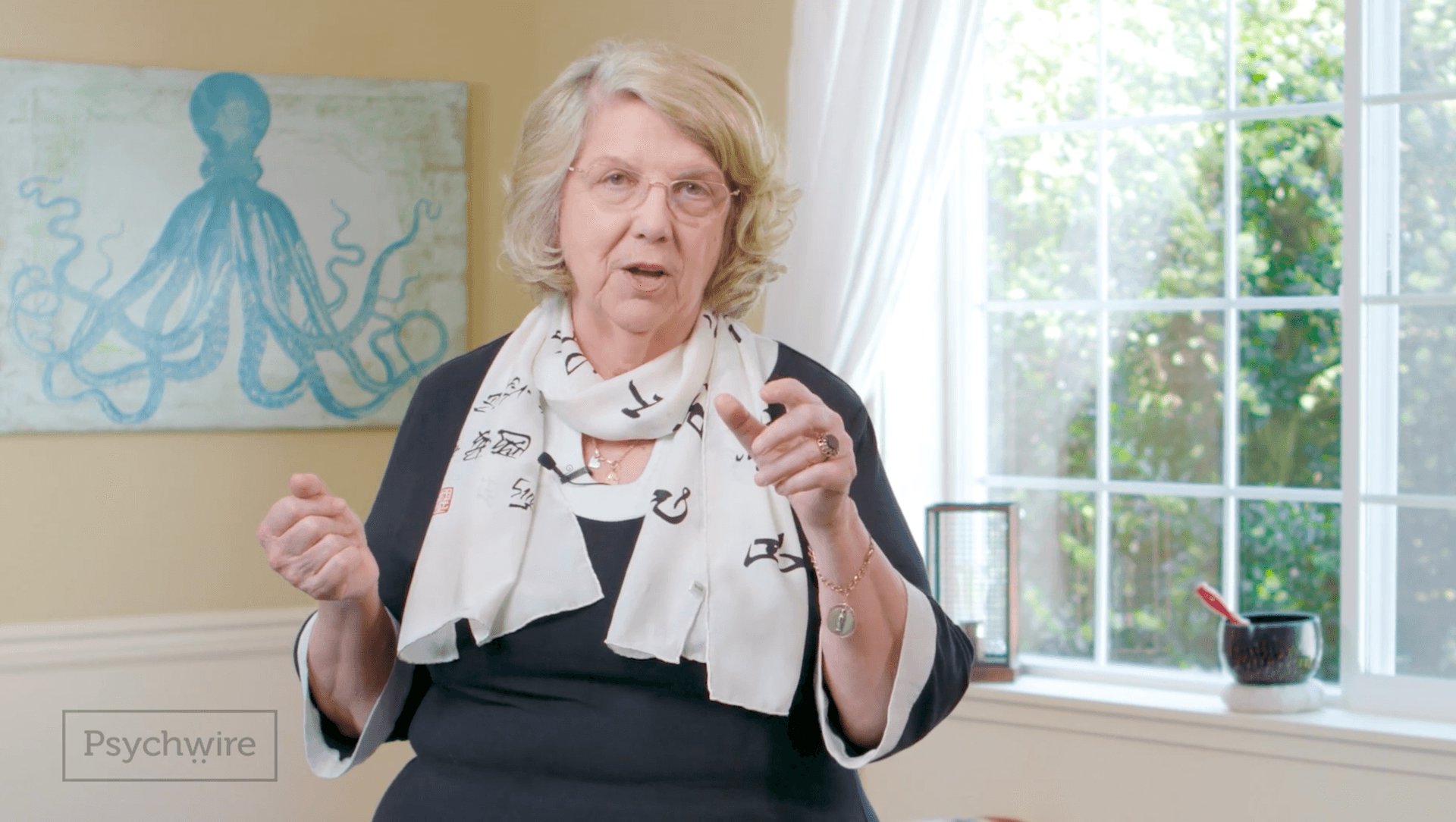
In this introductory video, Dr. Marsha Linehan, the founder of Dialectical Behaviour Therapy, provides some context for the four skills that make up the model. Specifically, she explains the background of the ‘dialectical’ part of the treatment - that is, the integration of change-based and acceptance-based interventions.
As Dr. Linehan shares in her DBT Skills Course, she began her first clinical internship as a behavior therapist working in a suicide prevention service. She quickly recognized that behavior therapy focused primarily on encouraging change, which often led to clients feeling criticized, misunderstood and invalidated, i.e. “You think it’s my fault!” Alternatively, when she shifted to a more supportive, acceptance-focused stance, she found that clients then felt like therapy wasn’t useful i.e. “You can’t help me!”
Marsha Linehan’s solution was to create a dialectical behavior therapy, an integrative model that offered the option of acceptance or change, depending on the client’s needs in any given moment.
The Four Modules of DBT
DBT’s four skills map directly onto this dialectical model. Mindfulness and distress tolerance are acceptance-oriented skill modules, while emotion regulation and interpersonal effectiveness are change-oriented skills.
Mindfulness
Mindfulness is generally the first skill clients learn in the model, and is foundational to the whole program, as Marsha Linehan emphasizes in the video. Mindfulness is the practice of bringing a conscious presence and awareness to everyday life. The mindfulness skills taught in DBT have been shown to offer physiological benefits, support greater self awareness, and help clients focus on the things that are important to them. Mindfulness also makes each of the other modules possible, because it gives clients the capacity to observe and take note of their internal experiences - their thoughts, feelings, memories and sensations - without immediately reacting to them or fighting them.
Interpersonal Effectiveness
The Interpersonal Effectiveness module includes skills that support individuals to build and maintain meaningful, healthy relationships. Interpersonal effectiveness can have a dramatic impact on an individual’s social and professional landscape, as well as their overall psychological wellbeing. This module includes a comprehensive collection of skills addressing many common challenges people face in areas like making and keeping friends, knowing how and when to say ‘no’, acting with professionalism, and seeking greater social connection while maintaining self respect.
Emotion Regulation
Emotion Regulation offers clients options for managing their emotions - especially feelings like anger and shame - so that they can carry on in their daily lives without feeling controlled by emotions in adverse ways. Emotional regulation is distinct from emotional suppression, and focuses on helping people understand and name their emotions, so they can have greater access to the value and benefits of emotions, without them overtaking everything. The skills help clients decrease the frequency of unwanted emotions, and build the kind of life that supports positive, balanced emotional experiences.
Distress Tolerance
Distress Tolerance offers clients new skills to get through painful moments and crisis situations. The distress tolerance module includes both crisis survival - dealing with high stress situations without making things worse - and reality acceptance skills, for coming to terms with things that have happened and aspects of the client’s present experience that they wish were different. These skills focus on acceptance of what is happening in the present, with the view that this is the first step in changing what is in our control.
Together, these skills address many emotional, cognitive, and relational challenges that show up across clinical presentations. By responding to the clinical challenges she faced in her early career, Marsha created a pragmatic approach to treatment that has been found to effectively treat not only suicidal patients like those from her early internship, but a range of other populations.
The Effectiveness of DBT Skills Training
The full DBT protocol and short-term DBT have both been found to be effective treatments for borderline personality disorder, reducing suicidality, general psychopathology and depressive symptoms in people with BPD, as well as improving compliance, impulsivity, mood stability, and frequency of hospitalizations (Hernandez-Bustamante et al., 2024). DBT has also been successfully adapted for the treatment of adolescents (see the work of Dr. Jill Rathus and Dr. Alec Miller, including their course, DBT Skills for Adolescents and Families) and trauma (see the work of Dr. Melanie Harned, including her course, Applied DBT Skills for Trauma).
What is interesting about the research on DBT is that when the components of the protocol are controlled for, skills training alone is found to account for unique reductions in non-suicidal self-injury, depression, and anxiety symptoms (Linehan et al., 2015). This demonstrates that DBT skills training alone can be of meaningful benefit to patients when offering them the full DBT protocol is not possible or practical.
DBT skills training has also been associated with a reduction in binge eating, binge/purge behaviors, and other disordered eating symptoms, as well as improvements in symptoms of inattention associated with ADHD (Harned & Botanov, 2016). Emerging research also suggests potential benefits for people with mood disorders, with DBT skills associated with a reduction of both depression and mania in this population (Harned & Botanov, 2016).
DBT skills can be taught as a standalone intervention in both individual and group training, but can also be included on an as-needed basis into other frameworks of therapy such as CBT, ACT, and relational therapies. For therapists, becoming proficient in DBT Skills equips them with a versatile toolkit of interventions that are applicable across a range of clinical presentations.