Applied DBT Skills for Anxiety and Mood Disorders
Integrate the transformational impact of DBT skills into your treatment of anxiety, depression and bipolar disorders in this online course.
Integrate the transformational impact of DBT skills into your treatment of anxiety, depression and bipolar disorders in this online course.

Anxiety and mood disorders are by far the most common presentations in both private and public mental health services. Most therapists are taught the theory of what causes, maintains and helps to address these conditions. The greater challenge is knowing what to actually do moment-to-moment in session with a client who is stuck, ambivalent, or struggling with symptoms that don’t just fit neatly into one diagnostic category.
Applied DBT Skills for Anxiety and Mood Disorders offers you a pathway to feeling confident addressing anxiety and mood disorders, including bipolar disorder, through the use of DBT skills. DBT skills are a versatile collection of interventions developed by DBT founder, Marsha Linehan. The skills distill key elements from multiple evidence-based treatments into a flexible suite of accessible, client-friendly skills and worksheets that can be used spontaneously in response to specific problems, or as a comprehensive treatment protocol.
Taught by DBT experts Dr. Alec Miller and Dr. Jill Rathus, this course offers:
What-to-do-when style teachings on using DBT skills with clients suffering from anxiety, depression, and bipolar disorder, as well as a range of comorbid presentations like self-harming behaviors and relationship problems
Detailed expert roleplays showcasing a variety of different client presentations
Assessment and case conceptualization modules to clarify which presentations benefit from which specific skills
In-depth material addressing the unique challenges of treating bipolar disorder, a complex condition often excluded from training about mood disorders.
Give yourself the gift of the clinical confidence that comes from having seen it done by expert clinicians at the highest level, beyond the theory that comes from just reading the manual.
Dr. Jill Rathus and Dr. Alec Miller have each devoted their careers to making DBT accessible and usable for thousands of mental health professionals all over the world. Both certified by the DBT-Linehan Board of Certification, they also co-developed DBT for adolescents and families alongside Marsha Linehan, and are co-authors of the leading treatment manuals for DBT in clinical and school settings. They both direct group practices in New York.
Dr. Miller and Dr. Rathus have both received high praise from students, particularly for the way they use clinical demonstrations to bridge the gap between knowing a framework theoretically and actually being able to use a skill in the room with a client. Their warm, down-to-earth teaching styles and dynamic therapy demonstrations leave students with an embodied, practical confidence that supports their growing theoretical knowledge.
You’ll also hear from a panel of some of the world’s leading DBT experts, including DBT founder Marsha Linehan herself. This extended faculty offers a rich collection of perspectives on the application of DBT skills, drawn from decades of collective experience at the highest level in both research and clinical practice.

Whether you're building your clinical toolkit from the ground up or looking for new skills to support your existing practice, this course will give you clear strategies backed by comprehensive rationales so you can confidently and immediately incorporate DBT skills into your treatment of anxiety, depression, and bipolar disorder. At the end of this course, you will:
Be able to apply the five DBT skills modules - mindfulness, distress tolerance, emotion regulation, interpersonal effectiveness, and walking the middle path - to address the symptoms of anxiety, depression, and bipolar disorder
Be confident applying DBT skills in clinical practice, either systematically as a comprehensive treatment, or flexibly within other therapeutic approaches and relational therapies.
Have the tools to identify and address therapy-interfering behaviors that are often associated with anxiety and mood disorders
Be more confident to take on a wider range of client presentations, including clients with cycling mood disorders like bipolar, or those suffering from multiple comorbid conditions.
This self-paced course includes:
Eleven modules and 14 hours of teachings focused on applying DBT skills in the treatment of anxiety and mood disorders
Expert instruction with Dr. Jill Rathus and Dr. Alec Miller
Detailed demonstrations and case conceptualizations with a variety of client presentations and comorbid conditions
Twelve months access to review the content at any time
This course is designed for psychologists, counsellors, social workers, psychotherapists, and other mental health professionals working with clients with anxiety, depression, or bipolar disorder, including cases featuring comorbid conditions.
This course is designed for therapists who are:
Early career clinicians looking for a comprehensive introduction to DBT skills that also supports their work with their most common client presentations
Established therapists interested in adding DBT skills to their toolkit, either as a stand-alone intervention, or alongside therapeutic approaches they already use
Therapists who are already familiar with DBT, but are looking for more specialized training in the application of DBT skills with anxiety and mood disorders
The DBT skills taught in this course are distinct from the full DBT protocol, and can be implemented immediately without the need for further training or endorsement.
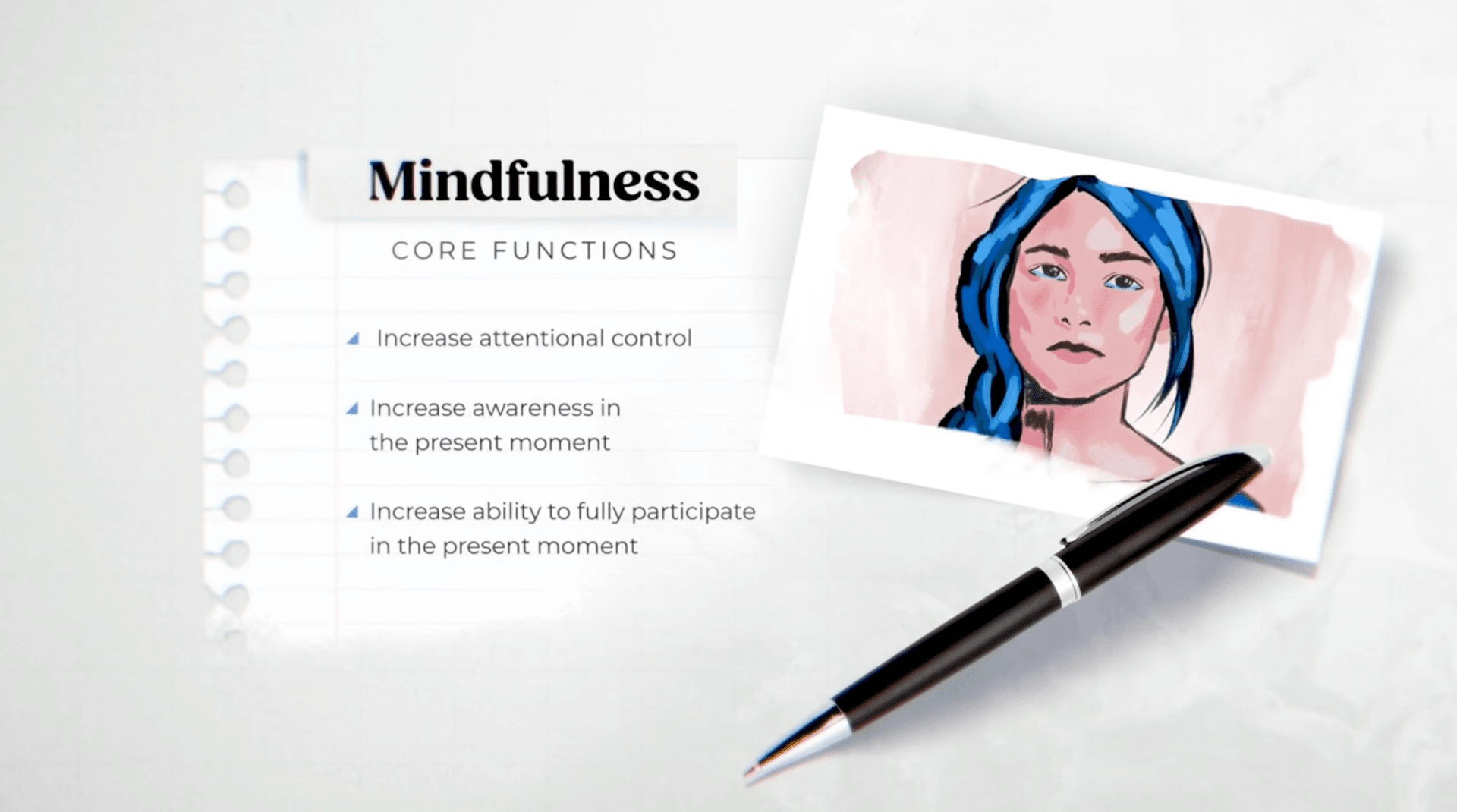
In this module, you’ll learn how DBT skills can be applied to understand and treat anxiety and mood disorders, including how to conceptualize symptoms through a DBT framework. You’ll be introduced to the core skills modules, mindfulness, emotion regulation, distress tolerance, interpersonal effectiveness, and walking the middle path, and how to tailor them to individual clients. The module also explores how these skills can be used both as a standalone treatment and to support other therapeutic approaches.

In this module, you’ll learn how to assess and conceptualize mood and related disorders using DSM-5 diagnostic criteria and a structured DBT framework. You’ll explore the role of thorough assessment, case conceptualization, and the impact of comorbidities, alongside practical demonstrations of identifying problems and setting “life-worth-living” goals. The module also covers assessment and treatment considerations for anxiety and bipolar disorders, with guidance on applying DBT skills to these presentations.

This module focuses on how to apply DBT skills in a targeted and flexible way, or as part of a comprehensive treatment approach, depending on your client’s needs. You’ll learn how to prioritize and sequence skills, use core behavioral strategies, and link interventions directly to treatment goals for anxiety and bipolar presentations. Through therapy demonstrations, you’ll see how to assess symptoms, build motivation, and select and apply skills effectively in practice.

We explore how to establish meaningful treatment goals and build client motivation to engage in DBT skills in this module. You’ll learn how to link clients’ specific problem areas to targeted skills to increase relevance and commitment. Through therapy demonstrations, you’ll see how to conduct intake, clarify goals, and introduce key skills such as ABC and PLEASE in practice.

This module focuses on addressing anhedonia and low behavioral activation in mood disorders using DBT-informed strategies. You’ll learn how to apply skills such as accumulating positives and mindfulness to increase engagement, pleasure, and daily functioning. Through therapy demonstrations, you’ll see how to introduce, implement, and troubleshoot these strategies, and support clients in building consistency over time.

We look at working with depressed, irritable, and heightened mood using DBT emotion regulation strategies in this module. You’ll learn how to apply skills such as Check the Facts and Opposite Action, as well as how to build longer-term change by linking values to goals and accumulating positives. Through therapy demonstrations, you’ll see how to implement these interventions in session, including supporting validation and addressing mood patterns in depression and bipolar disorder.

This module focuses on understanding and treating anxious mood using core DBT skills. You’ll learn how to apply mindfulness, distress tolerance, and emotion regulation strategies—such as paced breathing, Check the Facts, and Opposite Action—to help clients manage anxiety effectively. Through therapy demonstrations, you’ll see how to teach these skills in session and support clients in preparing for anxiety-provoking situations using tools like Cope Ahead.
We focus on addressing interpersonal challenges using DBT interpersonal effectiveness skills in this module. You’ll learn how to help clients clarify their goals in relationships and apply structured strategies such as FAST, GIVE, and DEAR MAN to navigate conflict and communicate effectively. Through therapy demonstrations, you’ll see how these skills can be taught and applied in practice, including with clients experiencing anxiety and bipolar-related interpersonal difficulties.
In this module, the focus is on addressing sleep, eating, and physiological regulation difficulties using DBT skills. You’ll learn how to apply strategies such as PLEASE, problem solving, and distress tolerance techniques to support physical wellbeing and reduce vulnerability to mood symptoms. Through therapy demonstrations, you’ll see how to build motivation, target health-related behaviors, and help clients manage distressing physical sensations associated with anxiety and bipolar disorder.
This module explores emotional and behavioral avoidance in mood and anxiety disorders and its impact on clients’ functioning. You’ll learn how to apply DBT skills such as mindfulness of current emotion, radical acceptance, and opposite action to reduce avoidance and increase engagement with difficult experiences. Through therapy demonstrations, you’ll see how to support clients in building acceptance and responding more effectively to challenging emotions.

Applied DBT Skills for Anxiety and Mood Disorders is designed for mental health professionals, health professionals and coaches worldwide. On completion you'll receive an official certificate of completion, which can be submitted to registration bodies for CPD.
This course is accredited for 14 CE/CME credit hours for US licensed professionals:
Psychologists - 14 CE hours, APA - co-sponsored with Amedco, an APA-approved sponsor
Social workers - 14 general CE credits, ASWB ACE
Physicians - 14 AMA PRA Category 1 Credits™, ACCME
Nurses - 14 contact hours, ANCC
Counselors, MFTs & addiction professionals - 14 hours, accepted by most US state boards via APA and ASWB ACE credit - see the state-by-state list
Approved CE activity with the New York State boards for Psychology, Social Work, Mental Health Counseling, and Marriage & Family Therapy.
View the full learner notification for this course (PDF) - includes complete accreditation statements, state board acceptance lists, learning objectives and faculty disclosures.