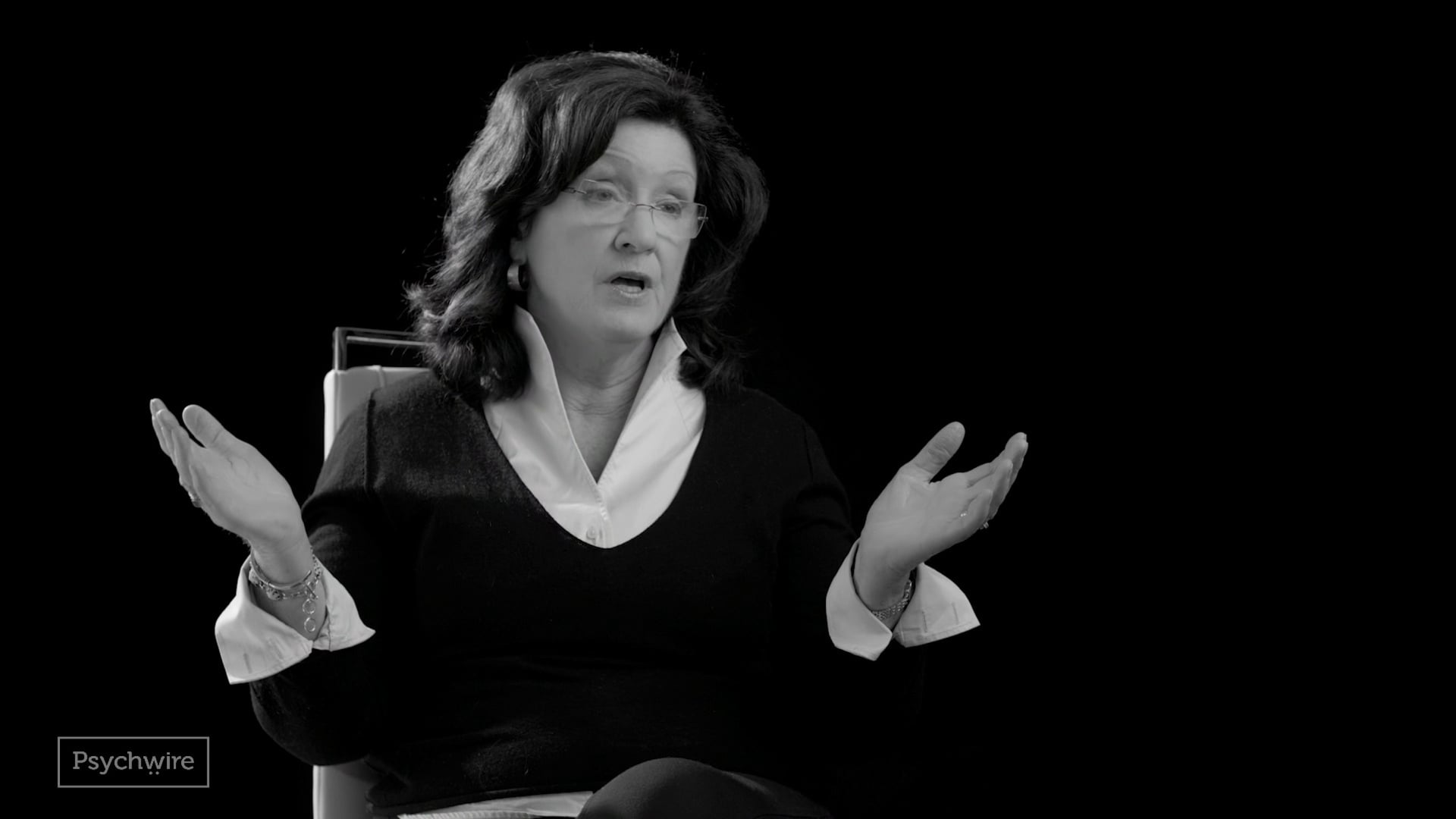
Emotionally Focused Therapy (EFT) made its name as a couples therapy framework, where it now stands among the most extensively researched and best validated approaches in the field. In this short video, its leading developer, Dr. Sue Johnson, corrects a common misconception about the model's reach. While EFT is most famous as a couples treatment, its core theories of attachment, relationship, and emotion make it transferable to a variety of individual presentations, as well as to work with families.
What makes EFT so widely applicable, Dr. Johnson explains, is that it is not a set of techniques. Rather, it is a way of engaging with and thinking about people that works across individual, couple and family work; a single, consistent methodology applied to different configurations of relationship. By focusing on attachment as a means of understanding personality and relational needs, as well as acknowledging emotion as a central driving force in both relationships and each individual’s inner life, EFT offers the opportunity of meaningful change across a wide range of challenges.
Dr. Johnson highlights this range: with individuals, EFT clinicians work with people experiencing anxiety or depression, or those who are struggling with a life dilemma. With couples, the approach addresses ordinary relationship distress, as well as life events like physical illness, and the interaction of relational conflict with mental health difficulties including PTSD, anxiety, and depression. EFT also helps highly escalated couples, couples so withdrawn they can barely talk to each other, as well as families with children who are struggling, whether acting out or withdrawn and depressed. Across all of these presentations, the underlying approach does not change.
Personality Through the Lens of Attachment
One of the pillars enabling EFT therapists to work across a wide range of presentations is an attachment-based theory of personality. Attachment science offers the clinician a coherent theory of who a person is: personality takes shape around how someone has learned to seek connection and to manage the fear of losing it. As Dr. Johnson details in both her published works and online trainings, every client arrives with working models of self and other, built from lived experience with attachment figures, that ask two core questions:
Can I count on you?
and
Am I worthy of your love?
The internalized answers to these questions organize every person’s approach to navigating their basic relational needs and fears. When connection feels difficult or hard to reach for, people tend to fall back on secondary strategies reflective of what they have come to know about relationships. These range from anxious pursuit and protest, to withdrawal and pseudo self-sufficiency, or some fluctuating mix of both sides of this spectrum. Read this way, the angry escalation of a distressed couple, the withdrawal of a depressed teenager, and the hopeless stuckness of an individual client can be formulated using the same underlying mechanisms. The clinician who can read attachment needs and fears has a framework for a wide range of presentations, including the constellations that make up a couple or family dynamic.
Emotion as a Transformational Force
Dr. Johnson also highlights the power of working directly with emotion, which she calls the most powerful thing in the room. In the EFT framework, emotion is seen as a guiding force in human life, rather than noise or pathology to be overcome or managed. It tells us what matters, orients us to our deepest needs, and organizes how we move toward or away from the people we love.
It is also through acknowledging and honoring emotion that EFT employs the concept of the corrective emotional experience, an idea with deep roots in the psychotherapy literature. In this model, the therapist seeks to offer a here-and-now experience within the therapy itself of a different type of emotional experience from the one the patient has come to anticipate in their relational life to date.
In these moments, the client has a new experience of connection that gives their working model of relationship a new data point. The therapist pursues this kind of experience in the hope that over time, the therapeutic relationship itself can inform part of a new, more secure attachment style in the client. Process research supports this emphasis: across therapy models, greater depth of emotional experiencing in session predicts better outcomes (Pascual-Leone & Yeryomenko, 2017). This mechanism of change is the same whether the client is an individual, a couple, or a family.
The Evidence Across Populations
In addition to these theoretical underpinnings of the framework, EFT has an ever-evolving research evidence base supporting its effectiveness for a wide range of presentations. The strongest evidence lies in the model’s origins as a couples therapy: a comprehensive meta-analysis of the couple therapy outcome literature found medium to large effect sizes for EFT, with roughly 70 percent of couples recovered from relationship distress at the end of treatment and gains maintained for up to two years (Spengler et al., 2024). Follow-up research shows that improvements in satisfaction hold over a two-year period after therapy ends (Wiebe et al., 2016), and that EFT can shift attachment security itself, with partners becoming measurably less anxious and less avoidant over the course of treatment (Burgess Moser et al., 2016). A neuroimaging study even found that after EFT, holding a partner’s hand had a greater calming effect on the brain's threat response under stress, particularly among participants whose relationships had initially been most distressed (Johnson et al., 2013).
The evidence extends to couples carrying additional burdens. A randomized trial found that adding EFT to antidepressant medication improved relationship outcomes for depressed women in distressed relationships (Denton et al., 2012). Another randomized trial demonstrated the effectiveness of EFT with couples in which the female partner was a survivor of childhood abuse (Dalton et al., 2013), and a study within US Veterans Affairs healthcare found reductions in relationship distress, PTSD symptoms, and depressive symptoms following EFT (Ganz et al., 2022). In the physical health domain, Healing Hearts Together, an EFT-based program for couples facing cardiac disease, produced clinically significant improvements in relationship distress, depression, anxiety, and quality of life in a proof-of-concept study (Tulloch et al., 2021).
As well as demonstrating the effectiveness of EFT for couples, this comprehensive body of research is being expanded to include studies of individuals and families. The first randomized controlled trial of Emotionally Focused Individual Therapy (EFIT) found that 15 sessions produced significant reductions in symptom distress, depression, and anxiety compared with a wait-list control among adults with major depressive disorder and comorbid anxiety (Wiebe et al., 2025). Research on Emotionally Focused Family Therapy (EFFT) is still developing, resting at this stage on case studies, small comparative studies, and preliminary work, including the clinical experience highlighted by Dr. Johnson. For clinicians, a strong understanding of the theory and mechanisms of the framework provides the best support for its transferability to clinical practice with individuals and families.
Attachment as a Unifying Framework
The practical promise of EFT for the clinician working across a range of presentations is considerable. Rather than switching between unrelated models for different presentations, clinicians can hold a single attachment map across a varied caseload, one grounded in a shared account of personality, need, fear, and emotion. Dr. Sue Johnson developed this integrative vision most fully in Attachment Theory in Practice: Emotionally Focused Therapy with Individuals, Couples, and Families (2019). Therapists who wish to train in the approach via Dr. Johnson’s teachings can also explore Psychwire's Emotionally Focused Therapy courses.