Trauma-Focused ACT
Somatic-focused, exposure-based, and incredibly practical course, with guidance from Dr Russ Harris in a dedicated forum.
Somatic-focused, exposure-based, and incredibly practical course, with guidance from Dr Russ Harris in a dedicated forum.

Trauma-Focused ACT: Working With Mind, Body and Emotion
Trauma-Focused ACT (TFACT) is a flexible, comprehensive approach, useful for the entire spectrum of trauma-related issues, including PTSD, moral injury, addiction, ‘resistant depression’, chronic pain, shame, suicidality, insomnia, attachment disorders, and more. It’s both a bottom-up and top-down and approach: at times, focused on the body (somatic awareness, interoceptive exposure, posture, movement, etc.), and at other times, working with cognition and emotion (values, defusion, acceptance, self-compassion, etc.).
In this online course, Dr Russ Harris shows you how to apply TFACT quickly and effectively, to help your clients find safety and security in their bodies, unlearn old physical responses to trauma, overcome abnormalities of arousal, shift from self-hatred to self-compassion, break free from dissociation, recover from numbness and emptiness, and steadily build richer, fuller lives.
In 2015, Dr Russ Harris, author of the best-selling textbook Trauma-Focused ACT, created a 10-hour ACT protocol for the World Health Organization, for use in refugee camps. The WHO have published three RCTs on this protocol, showing it not only reduces PTSD and depression (for refugees with multiple traumas, still living inside the camp) but also prevents the onset of mental illness in those at risk. As Kirk Strosahl, PhD, cofounder of ACT said, “Trauma-Focused ACT is going to go down as one of the great contributions to the field of trauma-informed care.”
A world-leading trainer, Russ is famous for making ACT accessible and practical. He has written ten books on ACT, of which his best known is the million-copy best-seller, The Happiness Trap. Through fun and engaging video lessons (if you know, you know!), powerful therapy demonstrations, and ongoing interactive discussions in the forum, Russ will guide you, step-by-step, through every aspect of TFACT, across a broad range of issues. (And you’ll also learn how to integrate it with other trauma therapies, such as EMDR, IFS, CPT, and PE.)
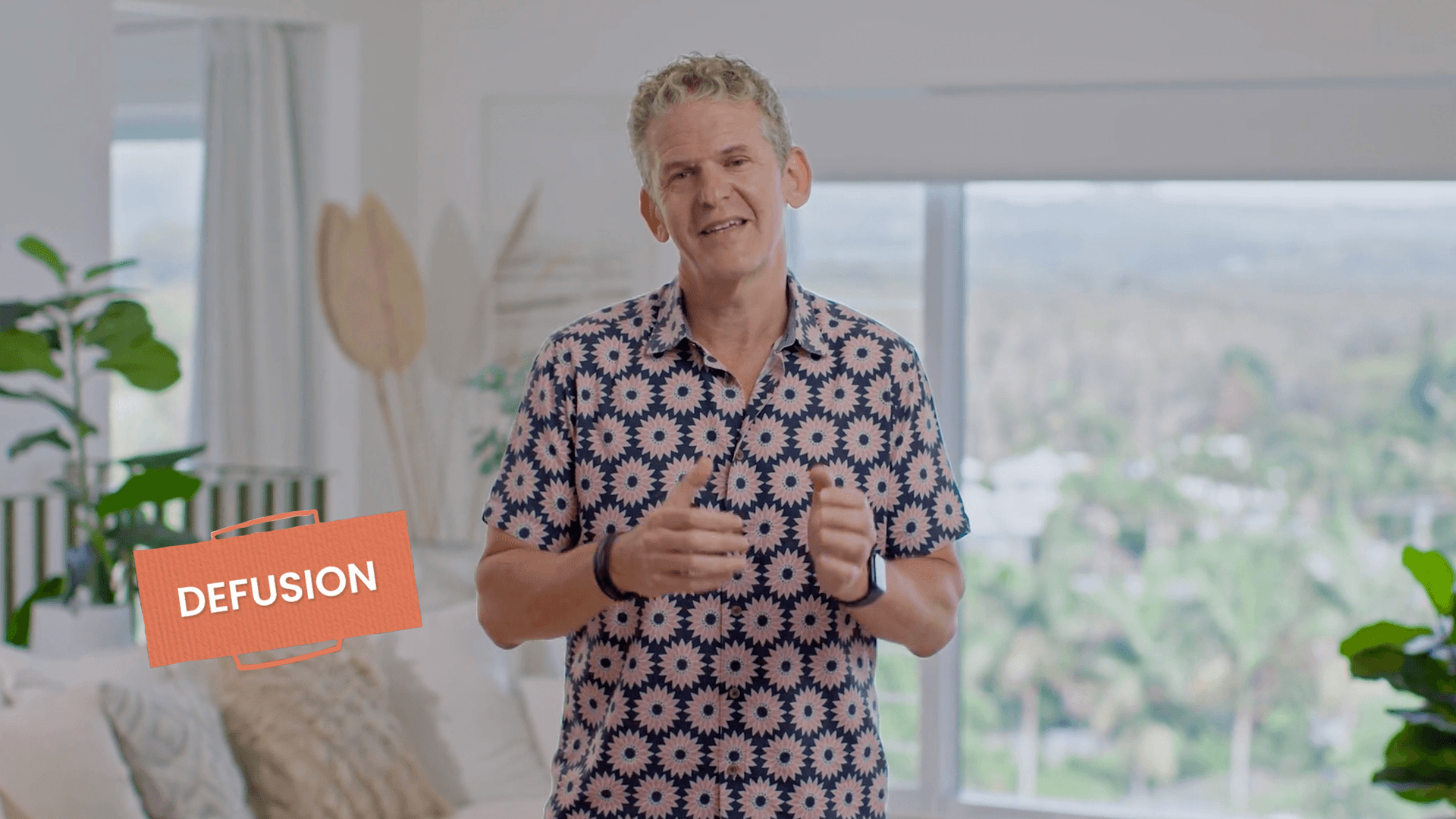
In everyday clinical practice, it’s quite uncommon for clients to present with a clear-cut diagnosis of PTSD. Far more commonly they present with relationship issues, social withdrawal, addictions, chronic pain, insomnia, shame and self-loathing, ‘resistant depression’, anxiety, and so on. TFACT can be flexibly applied with all these issues and more, because it’s not a protocol or a treatment specific to PTSD. It is a compassion-based, exposure-focused approach which is:
trauma-informed: drawing upon relevant fields, such as evolutionary science, Polyvagal theory, attachment theory, and inhibitory learning theory
trauma-aware: attuned to the possible role of trauma in a wide range of clinical issues
trauma-sensitive: alert to the risks of experiential work, especially mindfulness meditation
bottom-up or top-down as required
easily modified and adapted to suit each unique client and their own unique problems
easily integrated with other trauma therapies

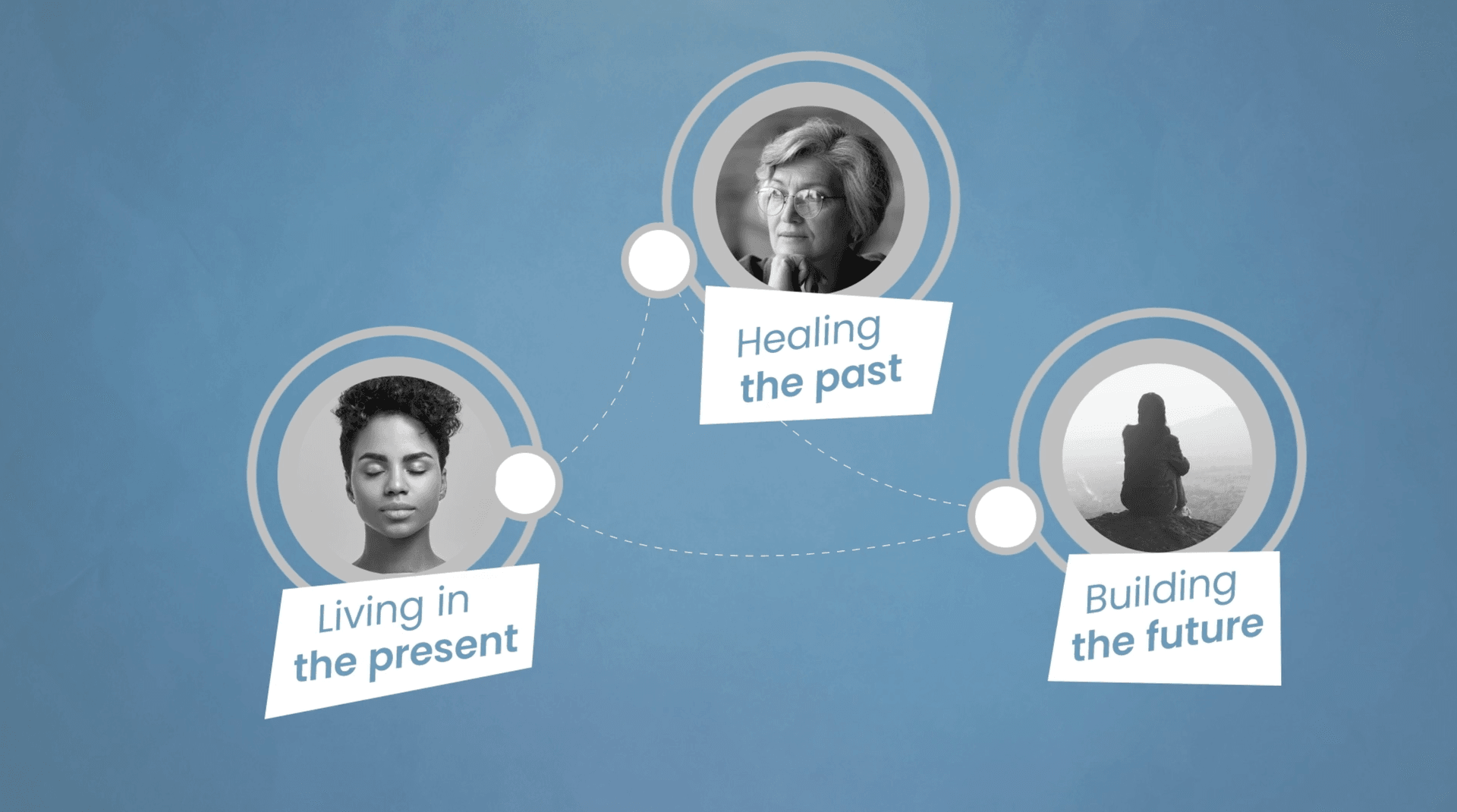
With this compassion-based, somatic-oriented approach, you’ll learn how to help your clients:
Find safety and security in their bodies
Overcome hyperarousal and hypoarousal
Break free from dissociation
Shift from self-hatred to self-compassion
Rapidly ground themselves and reengage in life
Unhook from difficult cognitions and emotions
Develop an integrated sense of self
Resolve traumatic memories through “inner child” work and flexible exposure
Connect with and live by their values, and engage fully in life here and now
Experience post-traumatic growth
And so much more!
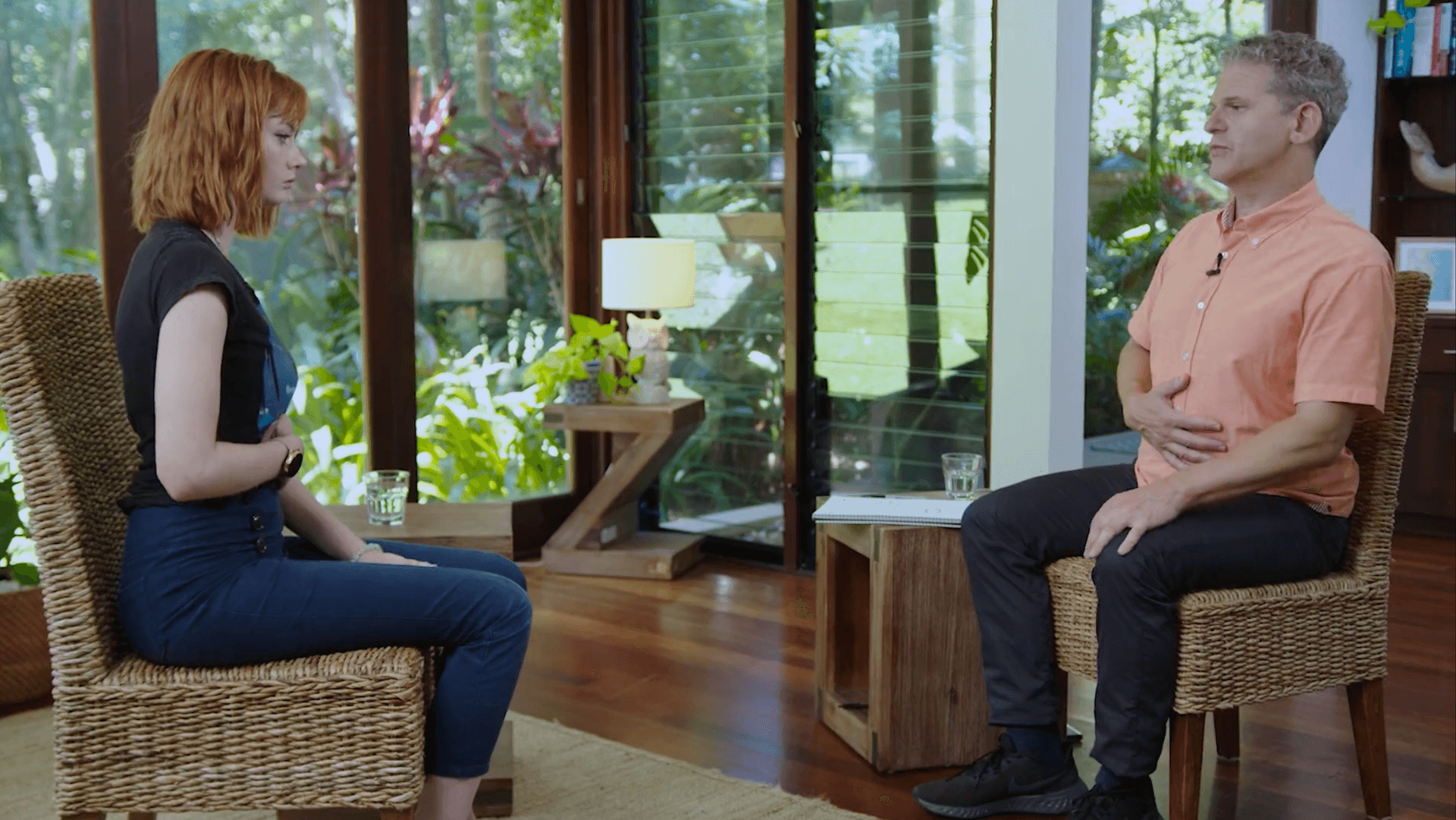
Trauma-Focused ACT is intensely practical, with a strong emphasis on skills-development. It will help you become more flexible, fluent and creative in ACT, so you can work effectively with the entire spectrum of trauma: simple, complex, acute or chronic.
You’ll learn how to use TFACT to effectively address: hyperarousal, hypoarousal, fractured sense of self, shame, guilt, self-judgment, self-loathing, aggression, withdrawal, dissociation, flashbacks, nightmares, helplessness, hopelessness, self-defeating narratives & schemas, social disengagement, relationship issues, self-harming, and more.
Prerequisites
This course assumes at least a beginners-level knowledge in ACT. Before enrolling, we recommend you do at least one of the following:
Attend an introductory level 2-day ACT workshop (with any ACT trainer).
Complete Russ's online ACT for Beginners course
Work through a beginners-level textbook, such as ACT Made Simple.
Enrollments
We're happy to help if you can't attend the current intake. Once your purchase is complete, contact our customer service team and we can enrol you in a future intake.
If you need an invoice, please fill out the form here.

We begin by introducing the course and what to expect in your learning journey.
We investigate 'what is trauma', with teaching and examples to enrich your learning.
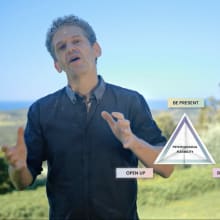
This module focuses on how ACT can help, with the choice point triflex investigated.
We delve into the neuroscience of trauma, with bonus content to enrich your learning experience.
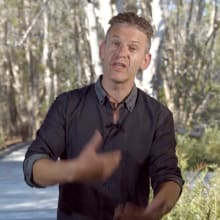
This module focuses on the value of the therapeutic relationship.

We focus on how to set up a session for success in this module, with practical demonstrations to illustrate.
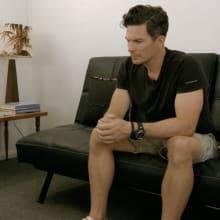
We investigate if clients HAVE to talk about their trauma in session.

We focus on the why and how of establishing goals with clients.

We take some time to focus on self-care for therapists in this module.
This module is packed with bonus content to enrich your learning.
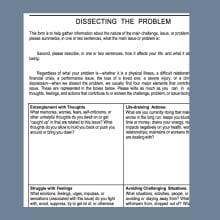
The optional assignments and reading for the week are outlined in this module.

Quiz questions

We begin week 2 by delving into emotional dysregulation and dropping anchor.
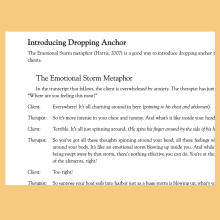
We explore how to introduce dropping anchor with our clients.
This module tackles dropping anchor with flashbacks, with teaching and demonstrations to guide your learning.

We focus on psycho-education with flashbacks, with tips to guide your clients.

The module introduces exposure, covering new school and graded exposure.
This module delves into what to do when things go wrong in session, with bonus content to enrich your learning.

We cover working with hyperarousal in this module.

This module focuses on hypoarousal, with demonstrations to illustrate key learning areas.
We investigate how to guide our clients from freezing, to thawing.
A bonus module packed with exercises to use with your clients.
The optional assignments and reading tasks for the week are explained in this module
Quiz questions and week conclusion

We begin week 3 by looking at how to use a functional analysis of behavior to guide your interventions.

This module explores how to help clients defuse from hopelessness.
This optional module is a refresher course on creative hopelessness.

We delve into acceptance, covering the four A's of acceptance.
We introduce working with numbness, with demonstrations to guide your learning experience.
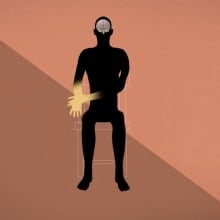
We explore guiding your client to reconnect with their body in this highly practical module.
Dancing with defusion is the focus of this module, with teaching and demonstrations to enrich your learning journey.

We investigate fusion and avoidance as barriers to therapy in this module.

This optional module focuses on inner child work - imagery and re-scripting.

We tackle tips for working with shame in this module.
A bonus module packed with extra resources.
This optional module contains assignments and reading for the week.
Quiz questions and conclusion

We begin a new week by delving into self-compassion.
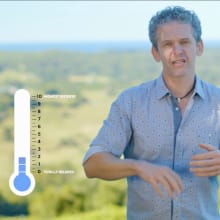
This module tackles the nuts and bolts of exposure.
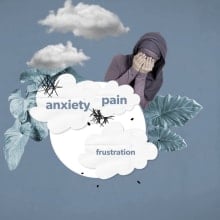
Setting up for exposure is the focus of this module, with practical strategies you can apply with your clients.

A highly demonstrative module which focuses on formal exposure to memories.
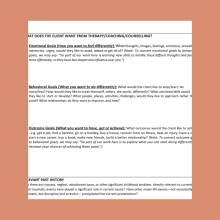
This module covers case formulation.
A bonus module packed with extra demonstrations and strategies
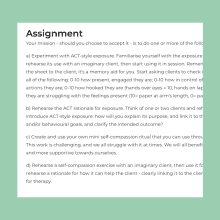
This optional module contains your assignments and reading for the week.
Quiz questions and conclusion

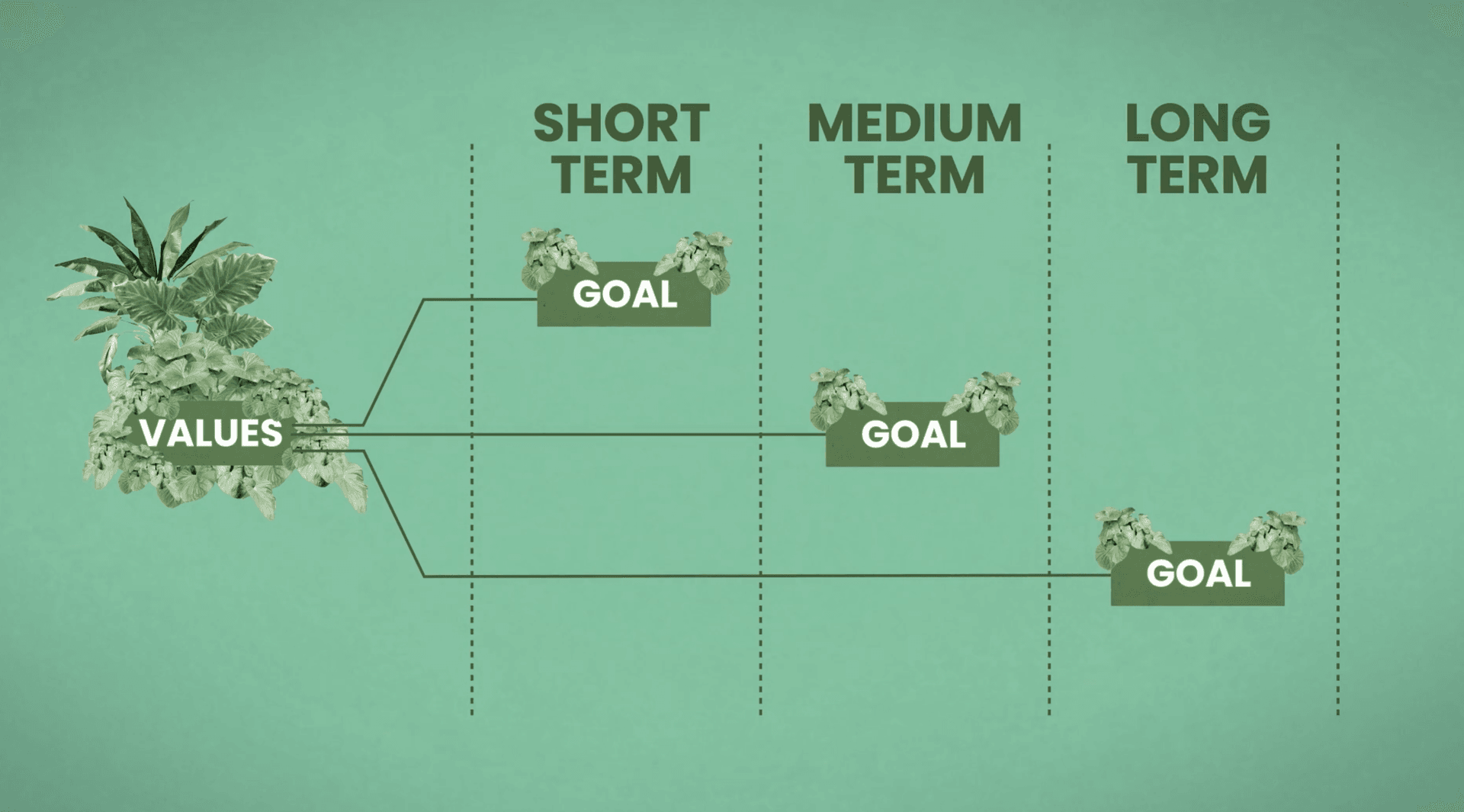
We begin week five by looking at values.
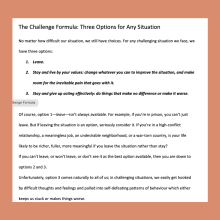
We delve into values-based problem solving in this module.
This module focuses on committed action, with an exploration of SMART goals.
Russ Harris demonstrates working with values, goals, action and barriers in session.

We tackle forgiveness in this module, both of self and others.
This module delves into working with anger, with demonstrations to illustrate key ideas.
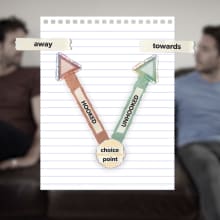
Working with trust issues is the focus of this module.
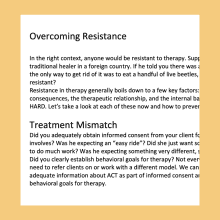
We look at how to overcome resistance in this module.

A bonus module packed with extra resources to enrich your learning.
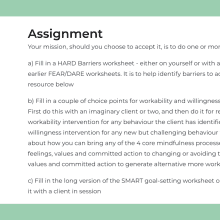
This module contains optional assignments and reading for the week.
Quiz questions and conclusion.

We begin a new week by focusing on event centrality, with metaphors and imagery to guide the learning experience.
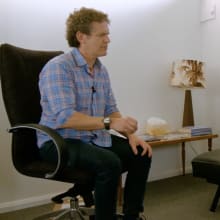
A highly practical module which covers self-as-context experiential exercises.

We delve into taking a stand in this module.

This module focuses on guiding your clients to build better relationships.
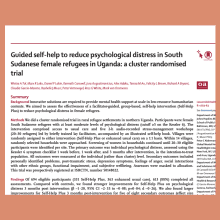
An optional module with bonus ACT materials from WHO
We focus on post-traumatic growth in this module and what makes it more likely.

We delve into getting unstuck, with practical strategies to help guide clients.

We recap the course and our learning journey.
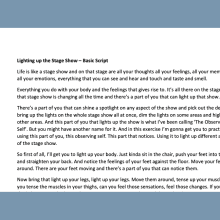
A bonus module packed with extra resources to enrich your learning.
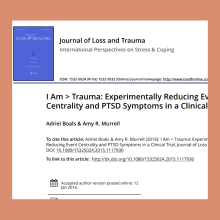
Further optional assignments and reading for the week.
Your last module contains quiz questions and a course conclusion.
Maíra MendesPsychologist - Matosinhos, Porto, PortugalGreat online training, lots of material, fun and humorous learning, contact with ACT model an appealing way, previous positive training experiences with the Psychwire platform.
Dr Jo NealPsychologist - Chester, UKRuss's delivery, as commented on by so many, is fun, intelligent, and clear. The course materials are spot on. I love the online delivery as I can go at my own pace in the midst of an exceptionally busy life. I feel very privileged to have been able to do this course, and I hope that I can defuse my own thoughts/emotions about my own abilities to put everything I've learned into practice. A big thank you!
Linda AdamsPsychologist - Palm Beach Queensland, AustraliaI have learned many useful strategies for working with clients and for clients to utilise themselves. You will expand your ability to apply ACT with clients and even if you have already studied quite a bit of ACT many of the concepts have been outlined in a new and easily absorbable manner.
Juan Francisco Vegas RochaPsychologist - PeruIt is a great course!! Have a lot of tools and suggestions to manages difficult situations in therapy.
Laura BirdPsychologist - Melbourne Victoria, AustraliaReally resonated with the ACT model and I can see how it could be beneficial or applied to almost every one of my clients! So I think there are a lot of other practitioners who could also benefit from using this approach with their clients. It's presented in a really clear, engaging way with a lot of repetition, which has helped to understand and consolidate the information.
Johan BekkerPsychologist - Blenheim, New ZealandI have found the course useful for my practice as well as in reflection on my own life. It is practical and functional, and the general public can relate to that. The countless examples with explanations are very helpful. I will definitely do more after this one.
Trauma-Focused ACT is designed for mental health and health professionals worldwide. On completion you'll receive an official certificate of completion, which can be submitted to registration bodies for CPD.
This course is accredited for 16 CE/CME credit hours for US licensed professionals:
Psychologists - 16 CE hours, APA - co-sponsored with Amedco, an APA-approved sponsor
Social workers - 16 general CE credits, ASWB ACE
Physicians - 16 AMA PRA Category 1 Credits™, ACCME
Nurses - 16 contact hours, ANCC
Counselors, MFTs & addiction professionals - 16 hours, accepted by most US state boards via APA and ASWB ACE credit - see the state-by-state list
Approved CE activity with the New York State boards for Psychology, Social Work, Mental Health Counseling, and Marriage & Family Therapy.
View the full learner notification for this course (PDF) - includes complete accreditation statements, state board acceptance lists, learning objectives and faculty disclosures.
The course contains many audio and text materials, from recordings of experiential exercises to eBooks on important topics. You can keep all of these materials – and you can freely share all the handouts, worksheets, and audios with your clients. For the video materials, you will have one year of unlimited access.
Yes, for sure.
Trauma-Focused ACT is actually a type of somatic therapy. It’s a bottom-up and top-down approach, and often the work is primarily somatic in focus. So if you’ve trained in models such as Somatic Experiencing, Hakomi Method, or Sensorimotor Psychotherapy, you’ll find much overlap with TFACT, and you can readily integrate the approaches.
If EMDR or IFS is your main approach, you can flesh it out by adding in TFACT. And if TFACT is your main approach, you can flesh it out by adding in EMDR or IFS. (Having said that, TFACT is usually used as a stand-alone model; it has its own exposure procedures for traumatic memories, and for 'working with parts', so there is no need to bring in EMDR or IFS. But if you want to, you can :))
Yes, you can. The protocol Russ wrote for the WHO for use in refugee camps was only ten hours in total: group sessions of two hours each, spaced out over five weeks. Yet even ten hours was enough for significant reductions in PTSD and depression.
Good question. Here’s Russ in his own words:
“This course is radically different to my textbook, Trauma-Focused ACT, in the same way that reading a travel brochure differs from going on a holiday, or reading a cookbook differs from eating a meal: reading those words doesn’t even come close to living the experience.
It's also different to my in-person TFACT workshops in two major ways:
a) it’s far more in-depth and immersive – because of the many videos of therapy sessions, the multimedia learning format, and the copious bonus materials
b) you have my ongoing guidance on a daily basis for twelve weeks. Yes, no virtual assistants or chatbots; every day, you can ask me questions and get my direct feedback.”
This course offers a downloadable Certificate of Completion you can use to show your professional development boards. CE/CME credits are also available for completing this course - please check the learner notification to view the relevant accrediting bodies.