ACT for Grief and Loss
Learn how to use ACT as a compassionate, empowering approach for all forms of grief: normal, complicated, ambiguous, disenfranchised, traumatic, and more in this online course with Dr. Russ Harris.
Learn how to use ACT as a compassionate, empowering approach for all forms of grief: normal, complicated, ambiguous, disenfranchised, traumatic, and more in this online course with Dr. Russ Harris.

Whether it’s bereavement, divorce, miscarriage, serious illness or injury - nothing really prepares us for those huge, painful and often unexpected losses. Grief-stricken clients are often overwhelmed by a whole host of painful emotions, from guilt, sadness and loneliness to anger, fear or despair. Often they feel ‘lost’, ‘directionless’ or ‘paralysed’, struggle with anxiety and uncertainty about the future, or experience a lost sense of self.
Clients may find their suffering unbearable, and therapists may struggle to help them adapt and move forward. ACT offers a compassionate way forward: a gentle, supportive pathway from grieving to growth.
Learn To Work Effectively With Any Aspect Of Grief
In this four-week journey, you’ll discover how to use ACT with any aspect of grieving, normal or abnormal, including how to:
Help in each stage of normal grief
Work flexibly with all forms of grieving difficulty: complicated grief, ambiguous grief, disenfranchised grief, etc.
Create hope and optimism in the face of devastating loss
Help clients cope with intense emotional pain, through mindfulness, grounding, acceptance and self-compassion
Sensitively facilitate healthy grieving, without pathologising it
Understand how cognitive fusion and experiential avoidance act as barriers to healthy grieving
Develop self-compassion, step-by-step, in just about anyone
Overcome guilt and shame, and practice self-forgiveness
Develop and use healing imagery
Cope with the aftermath of suicide
Create individualised grief rituals
Utilise mindfulness and defusion as antidotes to worrying, rumination, hopelessness and catastrophising
Appreciate and make the most of life after loss
Understand how ACT aligns with contemporary models of grief, such as the Dual Process Model and Continuing Bonds Theory
Dr Russ Harris, MBBS, is an internationally-renowned ACT trainer, and author of the world’s best-selling book on ACT, The Happiness Trap. Russ’s background is in medicine. As a physician, he became increasingly interested in the psychological aspects of health and wellbeing, which ultimately led him to change careers and become a therapist.
Russ’s ACT training reaches an extensive global audience of health professionals, and he has authored nine books on the ACT model. His best-known work, The Happiness Trap, has sold over one million copies, with translations into over thirty languages.
Russ's popular textbook for professionals, ACT Made Simple, reflects his genuine passion for making the principles and practice of this evidenced-based therapy simple, clear and easy to put into practice.

This four-week immersive training with Dr Russ Harris, gives you a practical, ACT-based approach that’s suitable for any aspect of normal or complicated grief. You’ll learn how to connect with and support your clients, while gently and kindly guiding them through making peace with their losses, and rebuilding their lives one step at a time.
You’ll learn through:
Engaging in-depth video lessons: clinically rich, simple to understand, straightforward to apply, and delivered with Russ’s trademark playfulness and humour
Powerful therapy demonstrations, that clearly show you how to put ACT into practice
Practical tools and step-by-step guidance – with direct feedback from Russ Harris on a daily basis
A wealth of additional written and audio materials, including eBooks, MP3 audios, and client handouts

This course assumes a beginners-level knowledge in ACT. It’s not essential, but we recommend before enrolling, you do one of the following:
Attend an introductory level ACT workshop (with any trainer, doesn’t have to be Russ), or
Complete Russ’s online ACT for Beginners course, or
Work through an ACT textbook such as ACT Made Simple (2nd ed) or an ACT self-help book like The Happiness Trap (2nd ed)
This course is open to any health professional, including therapists, coaches, counsellors, doctors, nurses, psychologists, psychiatrists, social workers, physios, dietitians, occupational therapists, youth workers, BCBAs, speech therapists, support workers, and any other type of health professional - as well as students and researchers in these fields.
Enrollments
We're happy to help if you can't attend the current intake. Once your purchase is complete, contact our customer service team and we can enrol you in a future intake.
If you need an invoice, please fill out the form here.

We begin by introducing the course material and ways approach the course.

Key beginning concepts and definitions about ACT for Grief and Loss are explored in this module.

We delve into self-compassion, focusing on kind self talk, touch, deeds and imagery.

We focus on bereavement in this module, with therapy demonstrations by Russ Harris to guide your learning.

A bonus module packed with extra therapy demonstrations to enrich your learning experience.

Quiz questions

We begin week two by exploring dropping anchor with grief and loss.

We delve into acceptance and defusion, with practical strategies and analogies to help you in sessions

This module explores grief rituals and gives keys to help clients create their own.

We investigate barriers to self-compassion in this module.

This highly demonstrative module delves into the loss of relationships.
A bonus module packed with further therapy demonstrations to enrich your learning.
Quiz questions

We begin week three by introducing taking a stand, translating values into action.

We explore how to guide your clients to find the treasure, with practical mindful exercises to utilize.

A highly practical module that demonstrates key learning concepts when dealing with loss.

A bonus module packed with extra therapy demonstrations to enrich your learning.
Quiz questions

We begin week four by investigating the conceptualisation of complicated grief.

We delve into interventions for complicated grief in this module.
Disrupting rumination is the focus of this module, with therapy demonstrations to illustrate key points.

We tackle hard conversations in session, with therapy demonstrations modelling practical strategies.

Some concluding thoughts and parting comments are included in this module.
A bonus module packed with extra therapy demonstrations.
Quiz questions and conclusion
Anette BrechtelPsychologist - Speyer, GermanyI personally have gained a lot from this course and the combination of short theoretical input and the client videos with clients demonstrating how to bring the theory into practice really helps me.
Manuela BarichelloPsychologist - Melbourne VIC, AustraliaI find the way the course is taught a balance of theory and practice an excellent way to learn, and love the videos and mindfulness exercises that are great for clients and for the self. The great balance of fun and exciting video presentations that explain the theory, client sessions where the theory is practiced- which explain the process and bring the ACT therapy alive.
Josephine RemziPsychologist - Essex, England, UKI have found the course extremely helpful in working with grief and loss. It has prompted me to use the 'kind hand' more with clients and indeed with myself. The sessions offered and particularly the sessions with Inez.
Damini GroverPsychologist - IndiaI learned a lot about the difference between normal grief and complicated grief and how to support oneself and others through this difficult process. This is a much-needed course. A lot of people do not know how to handle grief & moreover complicated grief. It's a wonderful learning experience.
David C. StonePsychologist - San Francisco, California, USAThis course is a well-thought-out map for treating clients who are in the process of grieving a loss. The genuine therapy clients make the therapeutic interventions much more salient and powerful.
Kevin ChavesRegistered Psychotherapist - Ottawa, Ontario, CanadaI really like the way the information is presented and have especially found the session videos to be very helpful. It's a flexible way to do some training and it is a great combination of practical materials and observing things in action.
ACT for Grief and Loss is designed for mental health professionals, health professionals and coaches worldwide. On completion you'll receive an official certificate of completion, which can be submitted to registration bodies for CPD.
This course is accredited for 8 CE/CME credit hours for US licensed professionals:
Psychologists - 8 CE hours, APA - co-sponsored with Amedco, an APA-approved sponsor
Social workers - 8 general CE credits, ASWB ACE
Physicians - 8 AMA PRA Category 1 Credits™, ACCME
Nurses - 8 contact hours, ANCC
Counselors, MFTs & addiction professionals - 8 hours, accepted by most US state boards via APA and ASWB ACE credit - see the state-by-state list
Approved CE activity with the New York State boards for Psychology, Social Work, Mental Health Counseling, and Marriage & Family Therapy.
View the full learner notification for this course (PDF) - includes complete accreditation statements, state board acceptance lists, learning objectives and faculty disclosures.
The course contains many audio and text materials, from recordings of experiential exercises to eBooks on important topics. You can keep all of these materials – and you can freely share all the handouts, worksheets, and audios with your clients. For the video materials, you will have one year of unlimited access.
This course offers a downloadable Certificate of Completion you can use to show your professional development boards. CE/CME credits are also available for completing this course - please check the learner notification to view the relevant accrediting bodies.
No. If you’re a relative newcomer to ACT, it’s wise to do the ACT For Beginners course first, to build your foundational knowledge and develop the core skills. But it’s not absolutely essential.
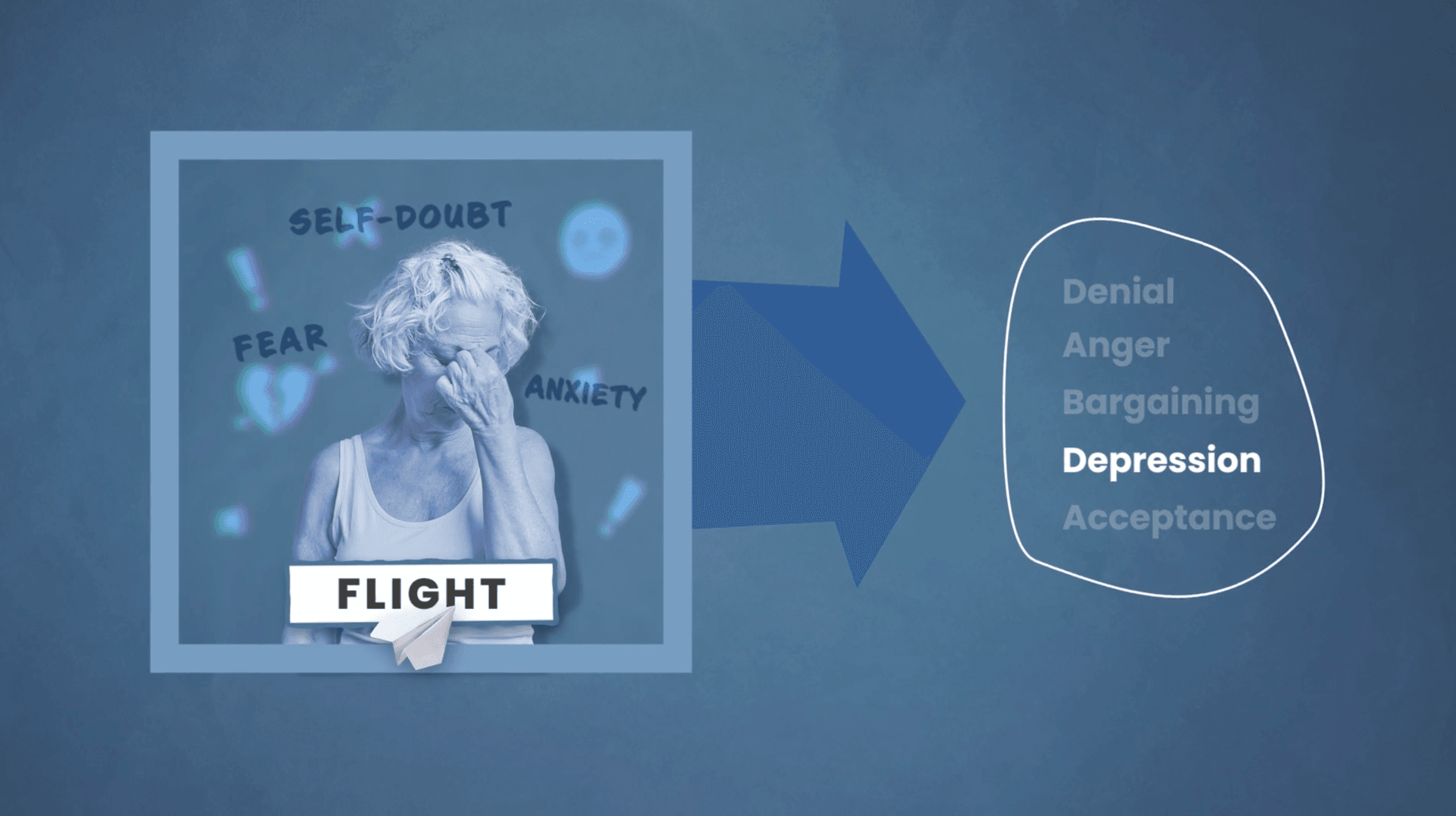
Yes, definitely! The course does not follow outdated models such as Kübler-Ross’s ‘five stages’. Although it’s an ACT approach, the course aligns well with modern grief frameworks such as Worden’s ‘Four Tasks of Mourning’, Stroebe and Schut’s ‘Dual Process Model’, and Klass's ‘Continuing Bonds Theory’ - which are touched on in the course.
ACT for Grief and Loss helps you look at grief and loss through an ACT lens: not as a disorder, or something that needs treatment – but as a profound, transformative human experience. You’ll learn how to provide a safe, compassionate space where clients can acknowledge and allow their painful emotions, learn values-based strategies to cope with loss, develop self-compassion, and find ways to move forwards in life while taking their pain with them.
You’ll gain confidence in helping your clients to move flexibly between accepting their loss, honouring and making sense of it, and rebuilding their life around it. Also, you'll gain a clear framework for guiding clients through a compassionate, meaningful grief process.