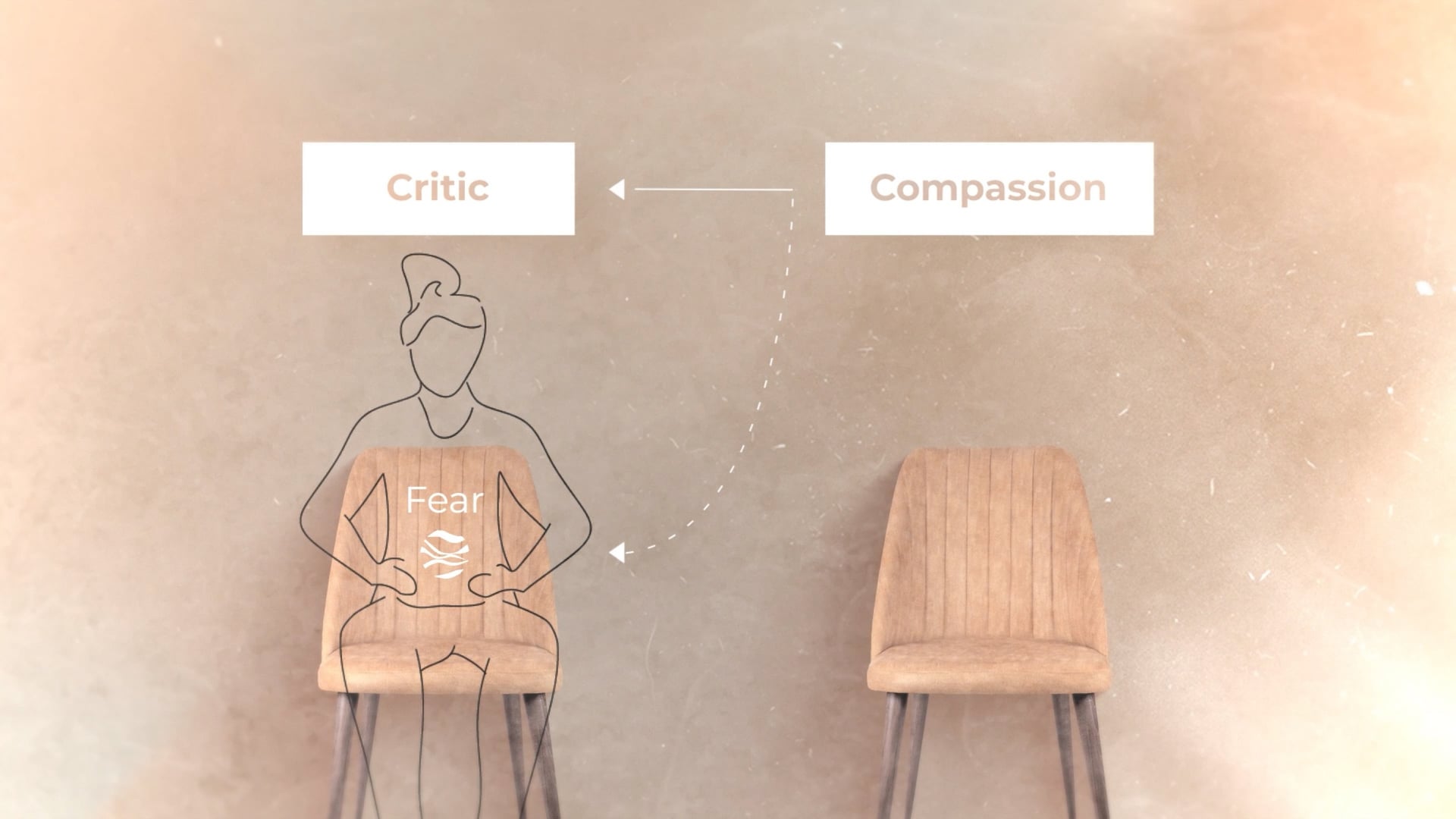

Compassion focused therapy is about exposure and action methods. And exposure and action methods often require people to become or enter into a particular kind of state, state of mind. And one way of doing that is with what is called chair work. Now in chair work, what you do is you designate one particular chair out of a number perhaps for the individual to take up a position.
So if you're doing audible selves, could have an angry chair, anxious chair, sad chair or indeed any emotion. You could have a shame self, guilt self. You can also do chair work with motives. My competitive motive, my caring motive. You can do with dilemmas. Supposing that you are not sure whether to stay in a job or leave a job.
So you have a chair which is the stay in the job chair and a chair which is the leave the job chair and you invite the client to engage fully in those different aspects of self. Chair work is really a way in which you enable people to kind of enter into a particular state of mind and explore that state of mind uncontaminated by all the other aspects. They can just focus on that aspect. Chair work is also very important for dialoguing between different aspects of the self. So when we're doing self criticism, we might have a chair that is the critic and engages in criticism and a chair that's the experiencer, the experiencing chair of the criticism and then they can experience what it feels like when they hear that criticism from themselves.
And then our third chair is always the compassionate chair. So whether you're looking at a dilemma or emotions or self criticism, the third chair is always the compassionate chair which is the chair which is then the chair where you go into the breathing, you engage the visualizations, you practice entering to that mind state and from that mind state you then look at and work with what you've just been working with. If you're doing self criticism for example, you'd invite the compassionate self to think about the critical self and to work with the criticized self. And when the compassionate self works with the critical self, it always goes the fear that sits under the criticism. The compassion always goes to that wound that sits underneath the criticism.
Chair work and these action methods of engaging and becoming that part of you you're working on can be distinguished from say more purely cognitive technique which can be extremely useful where you might look at the advantages and disadvantages of position. So the advantages and disadvantages of staying in the job, looking at the pros and the cons. In the CFT action techniques, you become the dilemma. You experience it in your body. You connect to memories. You look at the way you're thinking.
You experience the impulses to stay. So this is much more of an embodied way of engaging with, say, the dilemma than actually standing back from it and looking at it in a cognitive position.