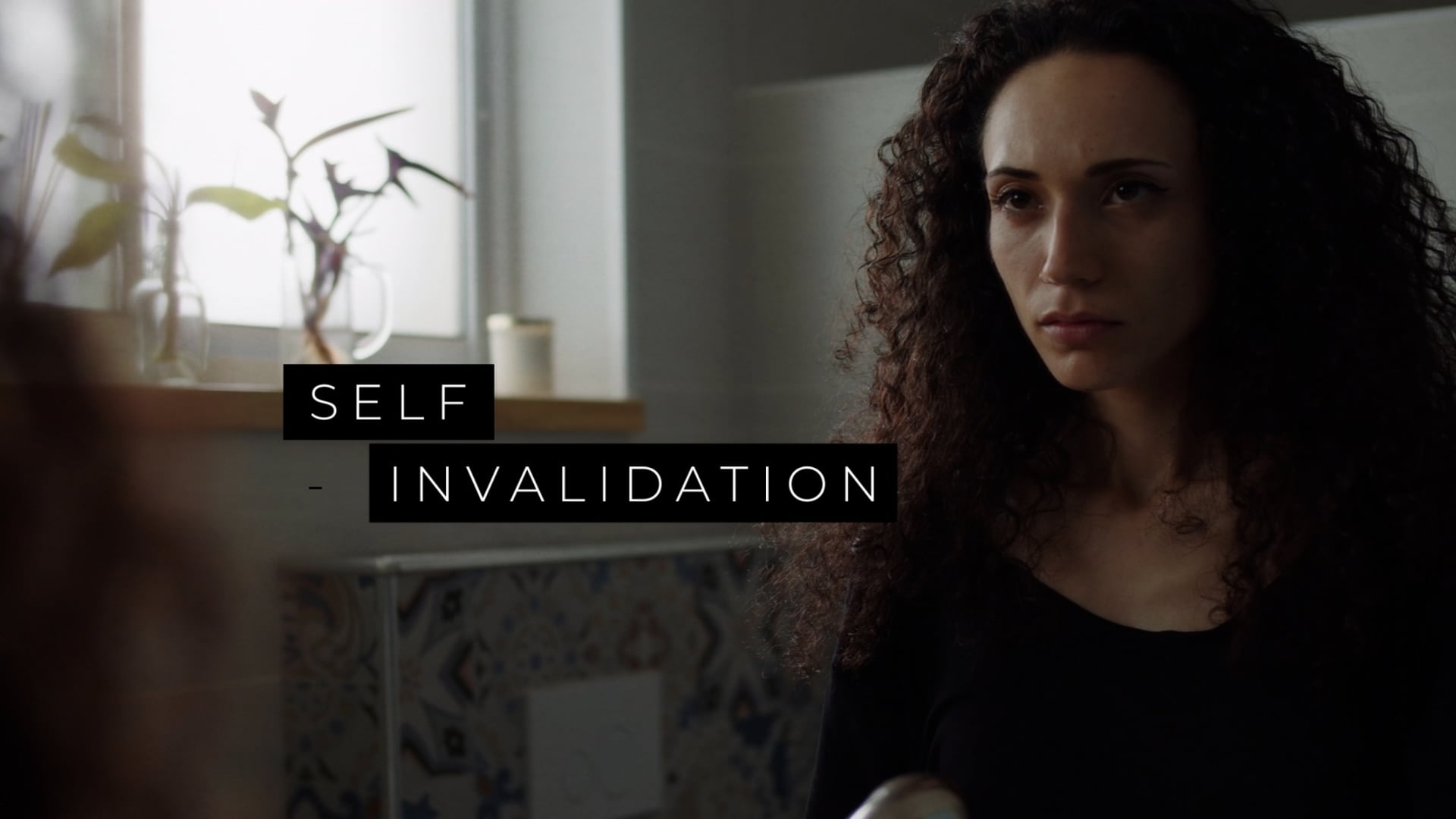

One of the long term and most profoundly damaging aspects of this repeated pervasive experience of invalidation across really important situations and relationships is what we call self invalidation. That's another way to think of shame. It is the person's internalized beliefs that they have heard and learned from a number of other contexts, which is that they are the problem. They are to blame. Their emotions make no sense. They have made a big deal out of nothing. That in a very fundamental and profound way, they are wrong about themselves and about how people are.
This self invalidation is often quite global about their experience of themselves in the world as broken, unworthy, and it actually really shows up in their experience of their own emotions. They have learned a high level of sort of suspicion and weariness about their own emotion. They often have this interpretation of their emotion from all of these series of learning, which is my emotion is probably not right. It is probably not accurate. It is too big. We often hear from clients say, I'm making a big deal out of nothing.
And we hear the things coming out of their mouths that really are messages they've received from a series of other experiences. When we're targeting this, it can be really tempting to just sort of argue with our clients about this, to try to get them to see our point that actually they are not broken, they are not unworthy. And early in treatment, that is actually received as incredibly invalidating. Arguing with somebody about their self construct doesn't work.
And so we are often early in treatment really just sort of pointing out, oh, I might think of that another way. Can I add another perspective to that? I'm not trying to convince them of it. I'm just sort of pointing out, gosh, it seems to me like maybe over lots and lots of experiences, you have actually gotten messages that said you were the problem, you were to blame. And I just sort of leave it there early in treatment, knowing that ultimately I'm going to wanna help my client move to self validation, which is being able to take their own side and see how these messages that they have received are really about learning as opposed to being truth with a capital t.
This self invalidation specific to emotion experience that often kind of enters into treatment with our clients can make it a really tough sell for us in saying, actually, your emotions are worth listening to. Your emotions are not wrong all the time. And in fact, sometimes what we're gonna actually try to get you to do is tolerate an emotion and perhaps even to act skillfully on your emotion. So clients coming into treatment often see their emotion as the problem. What they're coming to me for help on is to make their emotions go away, make their emotions smaller, get them to be more rational.
And so I'm really careful in the beginnings of treatment to sort of orient to actually, here are the places where your emotion is not wrong, actually really could be incredibly effective and helpful for you. So we're actually gonna spend some time listening to your emotion and not just trying to get it to be quiet or go away.