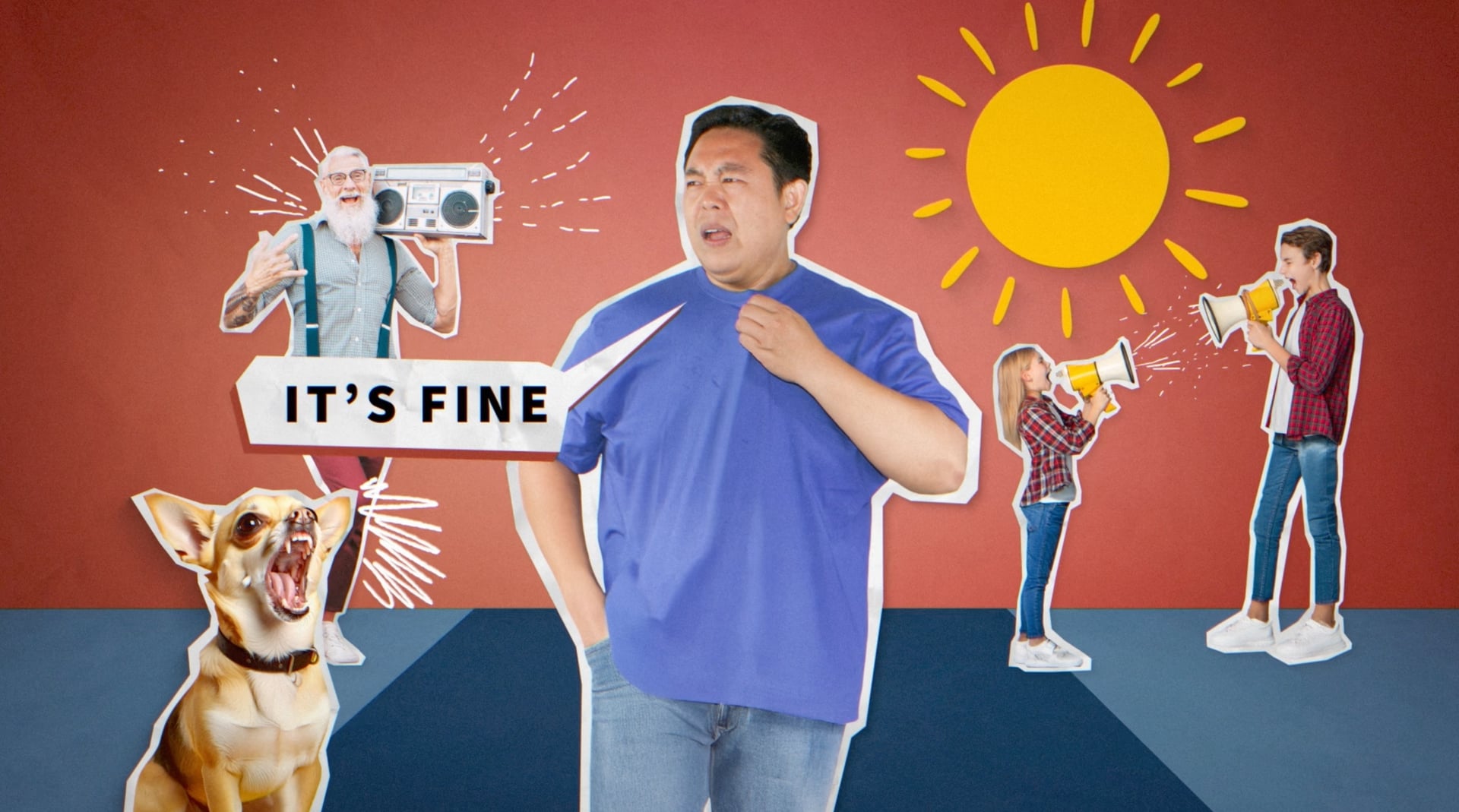

Let's talk about sex, baby. Let's talk about you and me, all the good times and the Sorry. Sorry. I'm a bit bit distracted there. Let's talk about sensory overload. You know what it's like to experience sensory overload where you're just getting bombarded by lots of different sensory stimuli that you can't cope with. I mean, it may even have happened to you in the first ten seconds of this video.
You've undoubtedly experienced this in places where you're caught in a large crowd and you're really crushed. Maybe at a rock concert or an amusement arcade. Maybe where you're just stuck in a traffic jam and everyone's honking and the sun's beating down on you. I'm sure you can think of lots of examples in your life. Now in those situations, you're overwhelmed by sensory stimuli and you just wanna get out of there. Imagine that ten times worse happening just about all day long.
That's what it's like for autistic clients that are struggling with sensory overload. Predominantly, this overload is coming from external stimuli such as things that you can see, hear, touch, taste, smell, the environment around you, for example, temperature and airflow, movement perhaps if you're in a car or a plane or on a boat, clothing you're wearing if it's tight or itchy and so forth. And it can also come from internal sources such as chronic pain. So a quick reminder that this model is called acceptance and commitment therapy, not passive acceptance therapy.
Nope. A big part of the work is committed action taking action to change what can be changed to build a better life. So we don't encourage people to just passively accept all of those difficult sensory stimuli. We want to explore what they can actively do to reduce or prevent difficult sensations arising from the external environment. What are things that you can do for yourself? For example, in overly bright environments, you might wear sunglasses.
If there's too much noise, you might wear noise cancelling headphones. If tight clothes are uncomfortable, you may select loose clothes. If labels are annoying, you might cut the labels off. So a lot of the time there are things that we can do that really only require our own agency. We can make these changes all by ourselves without needing to involve anyone else.
But there's also a lot of circumstances where we will need to involve others. We will need to ask for accommodations. So in a workplace situation, you may want to ask your boss if you can move to an area of the office that is less noisy or less bright, or a client may need to ask a therapist if there's a vase of flowers that the client finds really offensively smelly and stinky. Can you please remove these? I'm finding it hard to breathe here. Of course, asking for accommodations is often very challenging in and of itself and we will be addressing that later in the course.
Broadly speaking, there are four approaches to working with sensory disturbance. First and foremost taking action to reduce it to whatever extent that's possible. A second approach is to work on acceptance and willingness. When it's not possible to reduce or get rid of those difficult stimuli Let's work on accepting both the stimuli and the difficult emotions that arise in response to them. The third step building on that is self compassion. Not only acceptance and willingness, but also just acknowledging how difficult and painful it is to go through life that way and responding to yourself in a kind, caring, and supportive manner.
And last but definitely not least, self soothing. How can you soothe yourself when your nervous system has been knocked around by all of these difficult sensory stimuli?