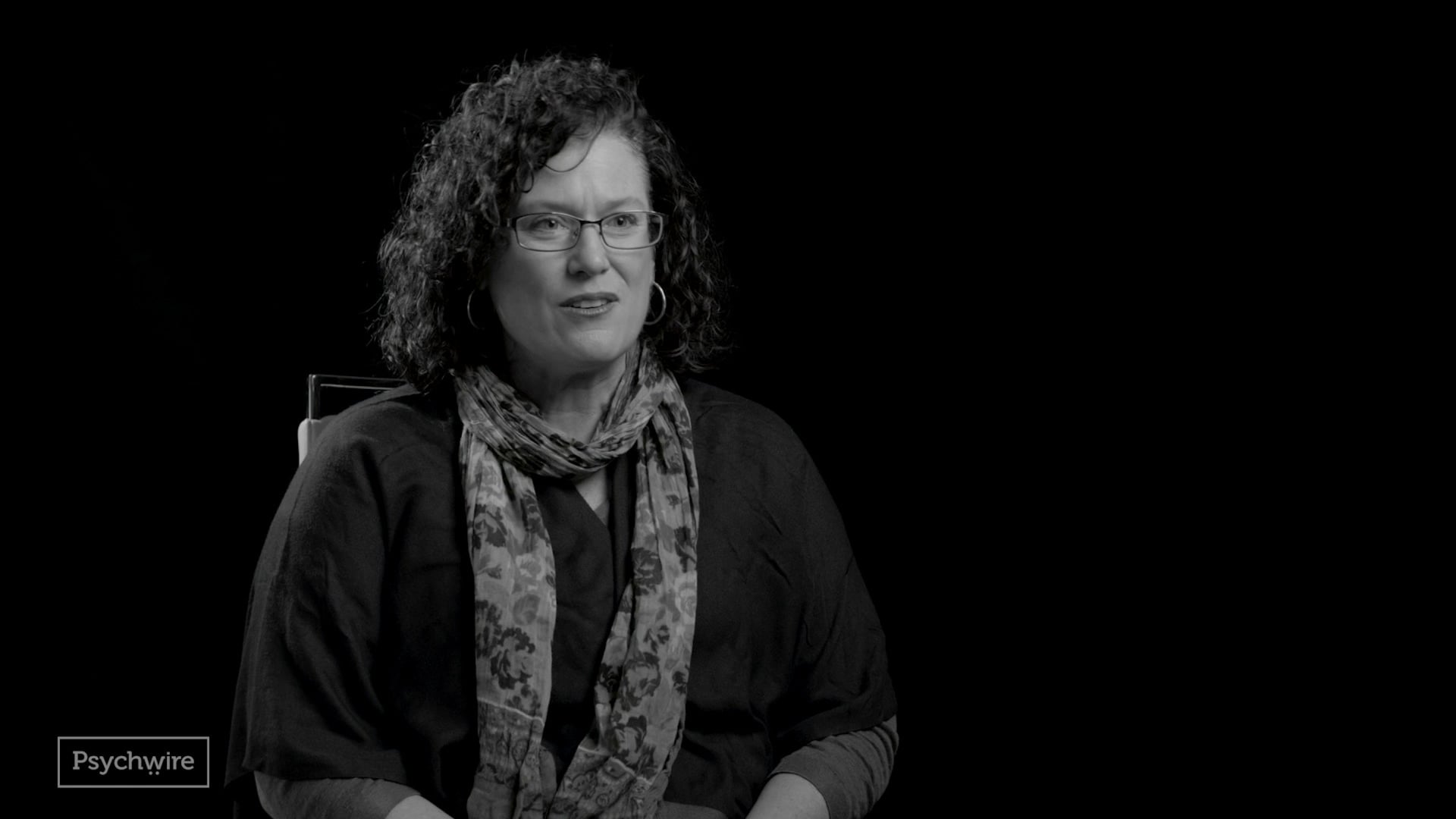
Attachment theory has its origins in the examination of the bond between infants and their caregivers. In this short video, expert EFT practitioner and trainer Dr. Kathryn Rheem traces how that theory grew up, that is, how researchers came to understand that the human need for connection does not end in childhood, but runs, in her memorable phrase, from cradle to grave.
For much of the twentieth century, the dominant psychological theories gave little attention to adult attachment, and generally saw dependency in relationships as something outgrown in childhood. If an adult patient presented with a preoccupation with issues in a primary relationship, this would have been seen as an emotional problem to be overcome.
Dr. Rheem highlights a turning point in the mid-1980s when a group of social psychologists placed an advertisement in a newspaper and started asking ordinary adults about their love lives. The history behind that advertisement, and what came after it speaks to some of the reasons why the ideas underpinning attachment theory resonates with so many people, even outside of clinical spaces.
First Wave Attachment Theory: Bowlby and Ainsworth
John Bowlby's early work sat with children separated from their families by war, evacuation, and long hospital admissions. His report for the World Health Organization on the mental health of homeless children (Bowlby, 1951) argued that a child's tie to a caregiver was a primary motivational system in its own right, wired for survival, rather than a secondary consequence of being fed. We take these ideas for granted now, but at the time, Bowlby’s argument was revolutionary and controversial. He laid out the full case across three volumes published between 1969 and 1980.
Mary Ainsworth made the theory observable. After conducting fieldwork with mothers and infants in Uganda, and then a longitudinal study of families in Baltimore, she designed the Strange Situation, a short laboratory sequence in which a toddler is separated from a caregiver in an unfamiliar room and then reunited (Ainsworth et al., 1978). What mattered for classification was less how distressed the child became than what the child did when the caregiver came back. Secure children protested the separation, sought contact, were soothed, and went back to play. Avoidant children appeared unbothered and turned away at reunion, while their physiological arousal indicated otherwise. Anxious-ambivalent children were hard to settle, alternating between clinging and angry resistance. Main and Solomon (1990) later described a fourth pattern, disorganized attachment, seen in children whose strategy broke down altogether: approaching the caregiver with the head averted, freezing mid-movement, showing fear of the person they were meant to run toward.
The step that followed moved from behavior to representation. Main, Kaplan, and Cassidy (1985) developed the Adult Attachment Interview, which classifies adults according to how coherently they can talk about their own childhood, whatever that childhood contained (Hesse, 2008). Attachment research had arrived in adulthood, but it had not yet arrived at adult love.
The Love Quiz
In 1987, Cindy Hazan and Phillip Shaver published a study in the Journal of Personality and Social Psychology that had begun with a love quiz printed in a Denver newspaper. Readers were invited to describe their most important romantic relationship and to choose which of three short paragraphs best captured how they generally felt about closeness. Those paragraphs were written as adult translations of Ainsworth's infant categories. Several hundred readers replied, and the distribution of their answers resembled the distribution found in infant samples, at roughly 56 percent secure, 25 percent avoidant, and 19 percent anxious. Each group also described love itself differently, and held different expectations about what other people would do when they were needed.
The conceptual claim underneath the survey was the significant part. A romantic partner, Hazan and Shaver proposed, functions as an attachment figure in the technical sense: a safe haven to return to under threat, and a secure base to move out from. The question that organizes an infant's behavior, whether someone is there and will respond, does not expire at twelve or sixteen or forty; the need for what Dr. Rheem calls “the felt sense of someone important having our backs” simply continues into adulthood. Where maturity is often equated with self-sufficiency, adult attachment theory holds that even high-functioning, well-educated, successful adults still need to feel that someone important loves them and knows them to be a special person.
The results of this initial finding were replicated in observational studies, including of partners waiting in anticipation for their significant other (Simpson, Rholes, and Nelligan, 1992), and couples observed parting at airport gates (Fraley and Shaver, 1998). Across self-report and observation, the same organized strategies appeared, along with an adult counterpart to disorganized attachment (Bartholomew & Horowitz, 1991). In her 2019 book Attachment Theory in Practice: EFT with Individuals, Couples, and Families, leading EFT developer Dr. Sue Johnson described this body of work as the second phase of the attachment research base that now spans parents, children, adult partners, and even representations of God. (For more, Dr. Johnson’s book is a free inclusion in Psychwire’s course, EFT: Attachment Science in Practice).
Implications for Clinical Practice
The practical value of adult attachment theory for a working therapist is that it converts a vague clinical impression into a map for treatment. The research outlined above formed the origins of a flourishing attachment-based therapy landscape, championed by people like Dr. Johnson. Her work with Emotionally Focused Therapy (EFT) has helped establish it as one of the most widely trained and researched couples therapy frameworks in the world.
For clinicians who want to put this science to work, Psychwire’s EFT: Attachment Science in Practice and EFT for Trauma and Attachment Injuries courses explores how adult attachment research can be applied in the treatment of individuals, couples, and families. For more on the EFT, see our other free resources, including What is Secure Attachment? and EFIT: A Non-Pathologizing Model.