EMDR for First Responders
Learn how to implement the healing power of EMDR Therapy to enable First Responders to heal from the years of stress pile-up and build resilience over time in this online course.


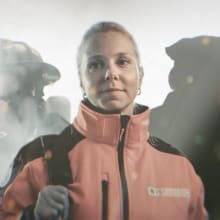
Embark on a transformative journey where the healing power of EMDR therapy meets the courageous hearts of First Responders. In this self-paced course, led by Dr Sara Gilman, a former firefighter turned clinical expert and leading trainer at Francine Shapiro's EMDR Institute, we delve into the profound intersection of trauma, resilience, and healing within the realm of emergency response professionals.
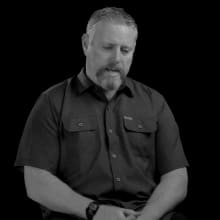
Drawing from her firsthand experience and professional expertise, Dr Sara Gilman, brings a dynamic approach to working with First Responders, bridging theory with practical application. Through poignant narratives and real-life accounts shared by First Responders themselves, you will gain invaluable insights into the nuances of Post-Traumatic Stress Injury and its manifestations within the culture of First Responders.
Featuring expert teaching, insightful interviews, and illuminating therapy demonstrations, this course provides a window into the transformative power of EMDR therapy. You will gain the tools and understanding to navigate the complex impact of cumulative traumatic stress exposure throughout the careers of our First Responders.
LEARNING OBJECTIVES:
Develop a deeper understanding of First Responders and the culture they work and live in
Learn how to develop rapport with First Responders, where they learn to trust the clinician and move forward in treatment
Identify effective stabilization tools with this population and ways to encourage their life time use for career resilience
Adapt each phase of the EMDR basic protocol in creative ways for efficient treatment
Learn how to identify EMDR targets in a brief counseling timeframe
Understand how Post-Traumatic Stress Injury shows up in First Responders
Develop strategies to help First Responders bridge the gap between work and home life
This on-demand course is available to start immediately, with 12 months access and a downloadable library of materials to keep. If you would like to request an invoice, please fill out the form here.

Welcome to the course - you'll meet your presenter & introduce your learning outcomes.

We begin by exploring who are First Responders.

This module continues introducing First Responders, with introductions to key clients in therapy demonstrations.

We investigate current research on First Responder stress.

This module delves into understanding First Responders.

Quiz Questions

We begin week two by delving into the eight phases for first responders.

This module focuses on coping strategies.

In this module, we will be looking at what helps first responders to manage the cumulative exposure to traumatic stress.

This module will cover a variety of clinical considerations that are paramount in the treatment of First Responders.

In this module, we examine how moral injury, shootings, administrative betrayal and active investigations may impact the first responder.

Quiz questions

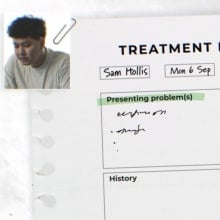
We begin by delving into phase one of treatment - history taking and treatment planning.

This module covers phase two of treatment - preparation and stabalization.

We explore phase three of treatment - assessment.

Quiz Questions

This week begins by delving in EMDR phase four - desensitization.

This module covers EMDR phases five - seven

This module features a therapy demonstration of reprocessing guilt - part one

This module features a therapy demonstration of reprocessing guilt - part two.

This module continues with therapy demonstrations with the same client, now focused on reprocessing childhood.

Quiz questions

We introduce the week's goals and hear from an array of EMDR experts about the power of EMDR in reprocessing traumatic memories.

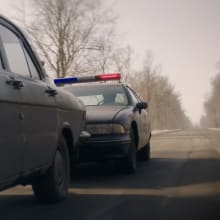
This module features therapy demonstrations with a police officer - reprocessing.

We continue to follow this client with therapy demonstrations centred around reprocessing fear.

This module features therapy demonstrations with a firefighter - reprocessing.

We continue to follow this client with therapy demonstrations centred around reprocessing betrayal.

Quiz Questions

We begin the week by focusing on moving forward with treatment.

This module covers additional tips in treating First Responders.

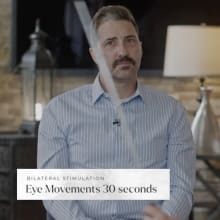
We explore innovative approaches to treatment in this module.

We cover clinician self-care in this module.

We complete our course content by looking at the 'business' of working with First Responders.

Quiz questions and course completion.
EMDR for First Responders is designed for EMDR trained therapists worldwide. On completion you'll receive an official certificate of completion, which can be submitted to registration bodies for CPD.
Participants can earn 12 EMDRIA Points for this training.
This course is also accredited for 12 CE/CME credit hours for US licensed professionals:
Psychologists - 12 CE hours, APA — co-sponsored with Amedco, an APA-approved sponsor
Social workers - 12 general CE credits, ASWB ACE
Physicians - 12 AMA PRA Category 1 Credits™, ACCME
Nurses - 12 contact hours, ANCC
Counselors, MFTs & addiction professionals - 12 hours, accepted by most US state boards via APA and ASWB ACE credit - see the state-by-state list
Approved CE activity with the New York State boards for Psychology, Social Work, Mental Health Counseling, and Marriage & Family Therapy.
View the full learner notification for this course (PDF) - includes complete accreditation statements, state board acceptance lists, learning objectives and faculty disclosures.

Fiona DesiraPsychologist - Dubai - United Arab EmiratesThe course is great. This is my second Psychwire course, and I intend to access more. The course is very informative and easy to access in your own time and at your own pace. It is very relevant to my clinical practice.
Agnes ThompsonPhysician - Calgary, Alberta, CanadaI love the format and I learn effectively. I’m very happy with Psychwire educational opportunities.
Janice RicePsychologist - Sammamish, WA, USAI would recommend Psychwire over other online courses. The course is engaging, concise, fun, and has very usable material!
Angela McCaffertyPsychotherapist - Renfrewshire, Scotland, UKI'd recommend Psychwire courses because the content and variation of techniques used are sure to suit most if not all learners.
Maria Natália MendesPsychologist - Matosinhos, PortugalThey have great online training, lots of material, and fun and humorous learning. I've had previous positive Psychwire training experiences too.
Heather Barnett VeaguePsychologist - Concord, MA, USAI always recommend Psychwire for its engaging platform and content. This is my third Psychwire course in the past year. I find the training demonstrations very helpful and instructive. It is useful, easy to follow, and extremely relevant to my practice.